
Last updated November 21, 2026
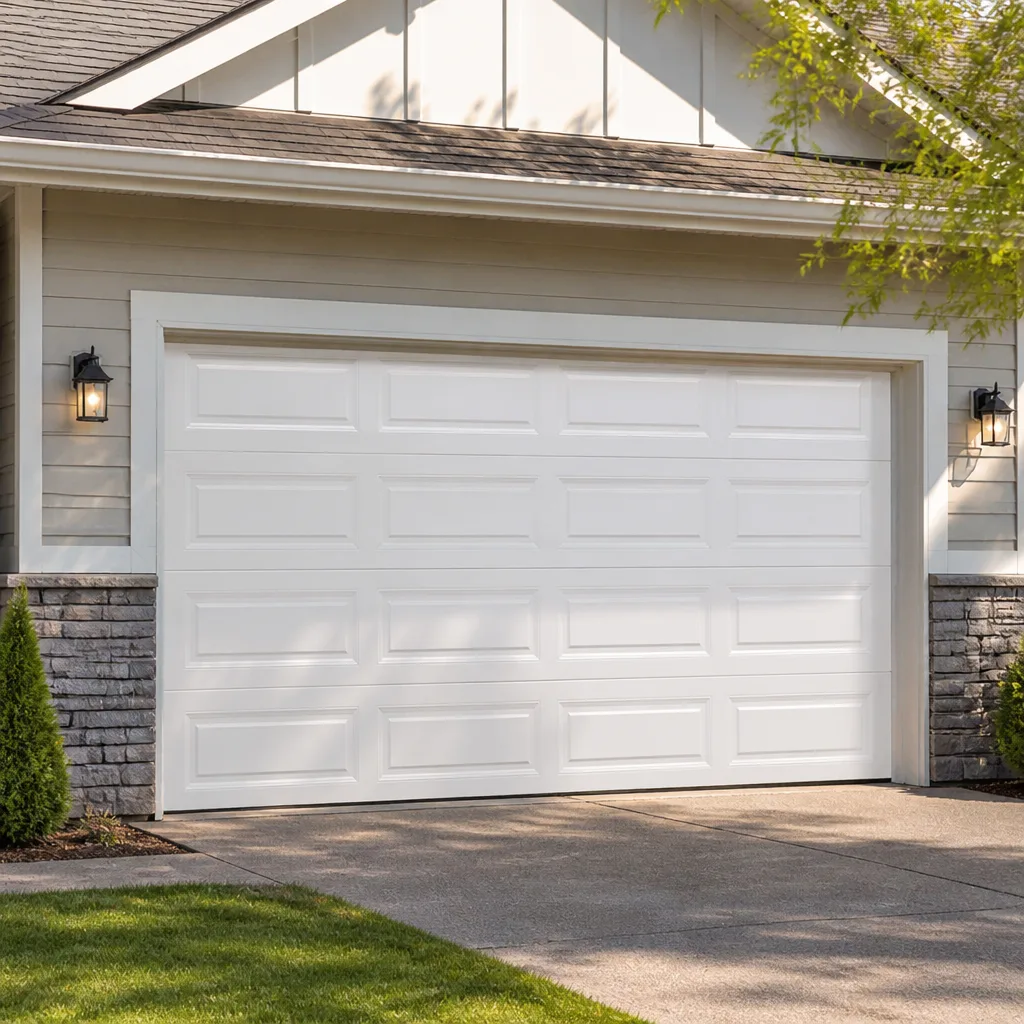 Raised-panel steel
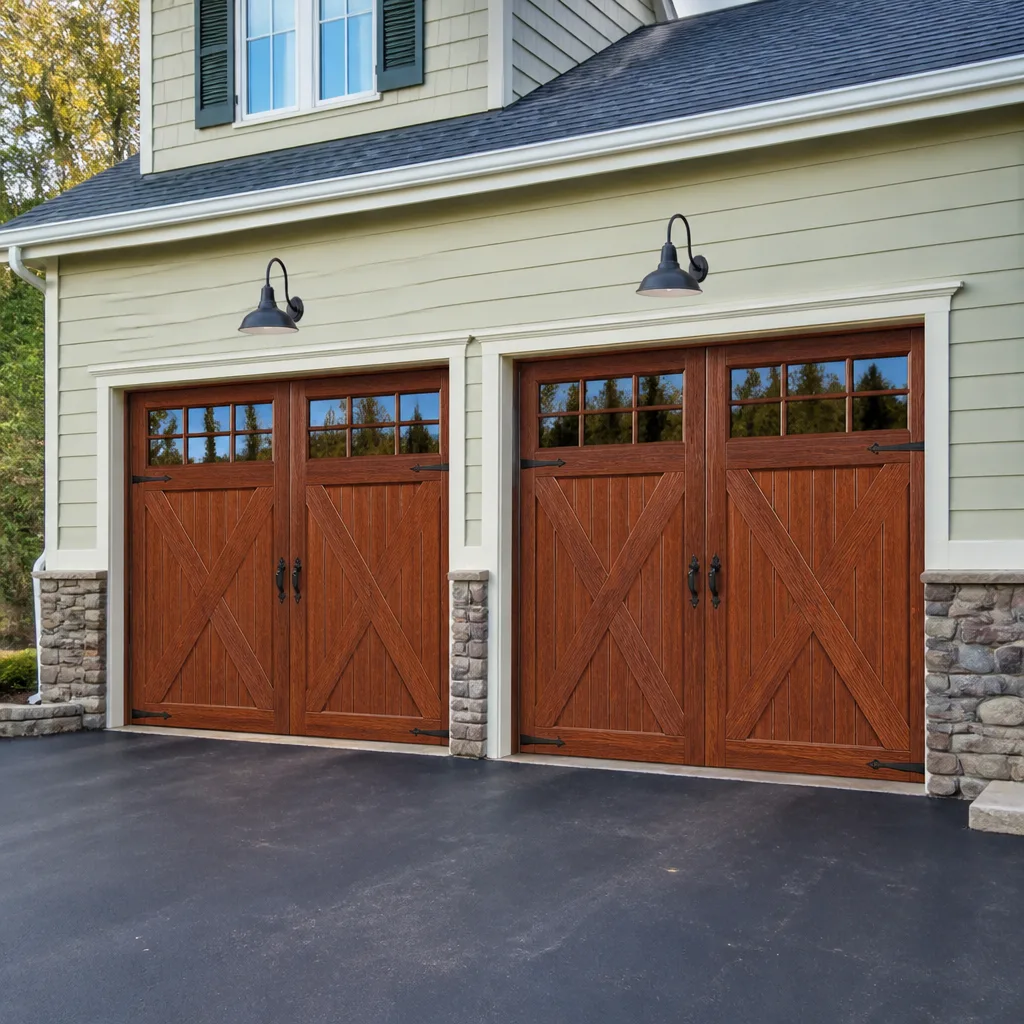 Carriage house
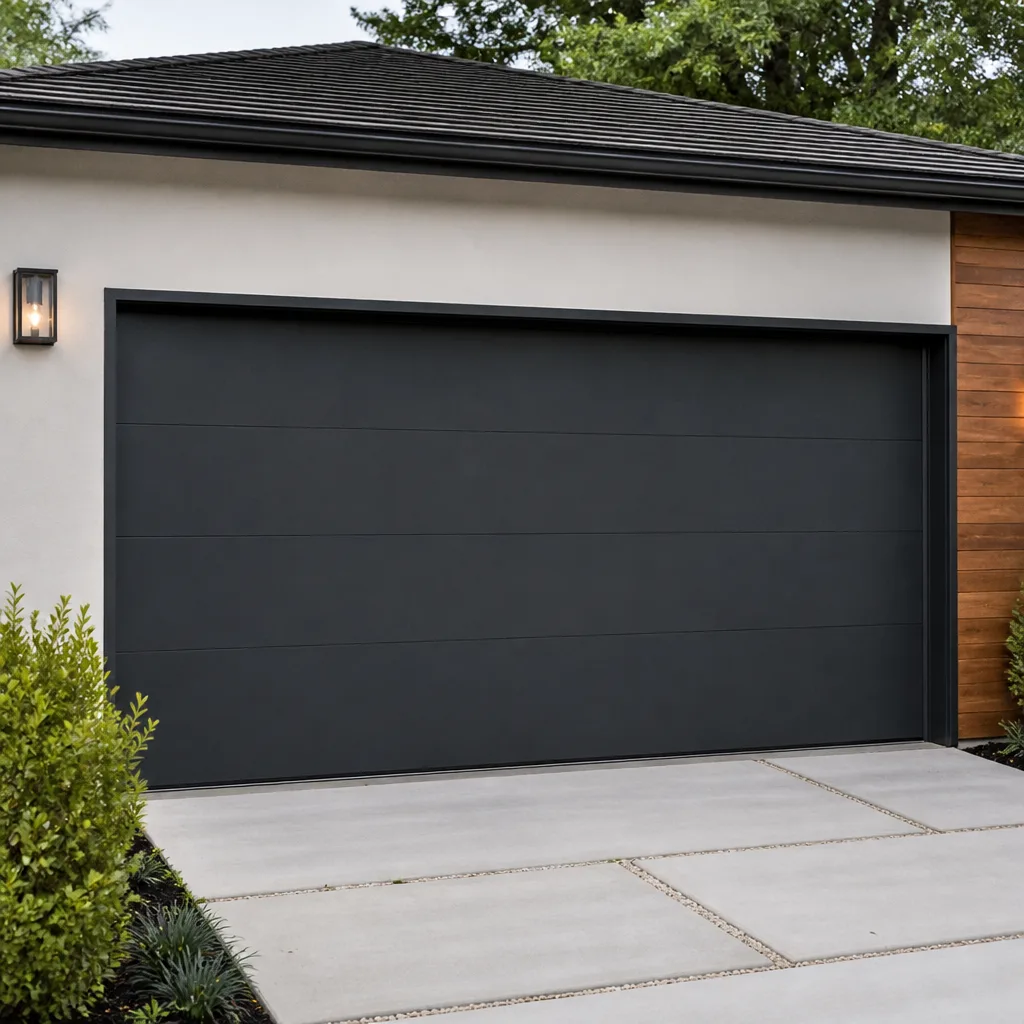 Modern flush
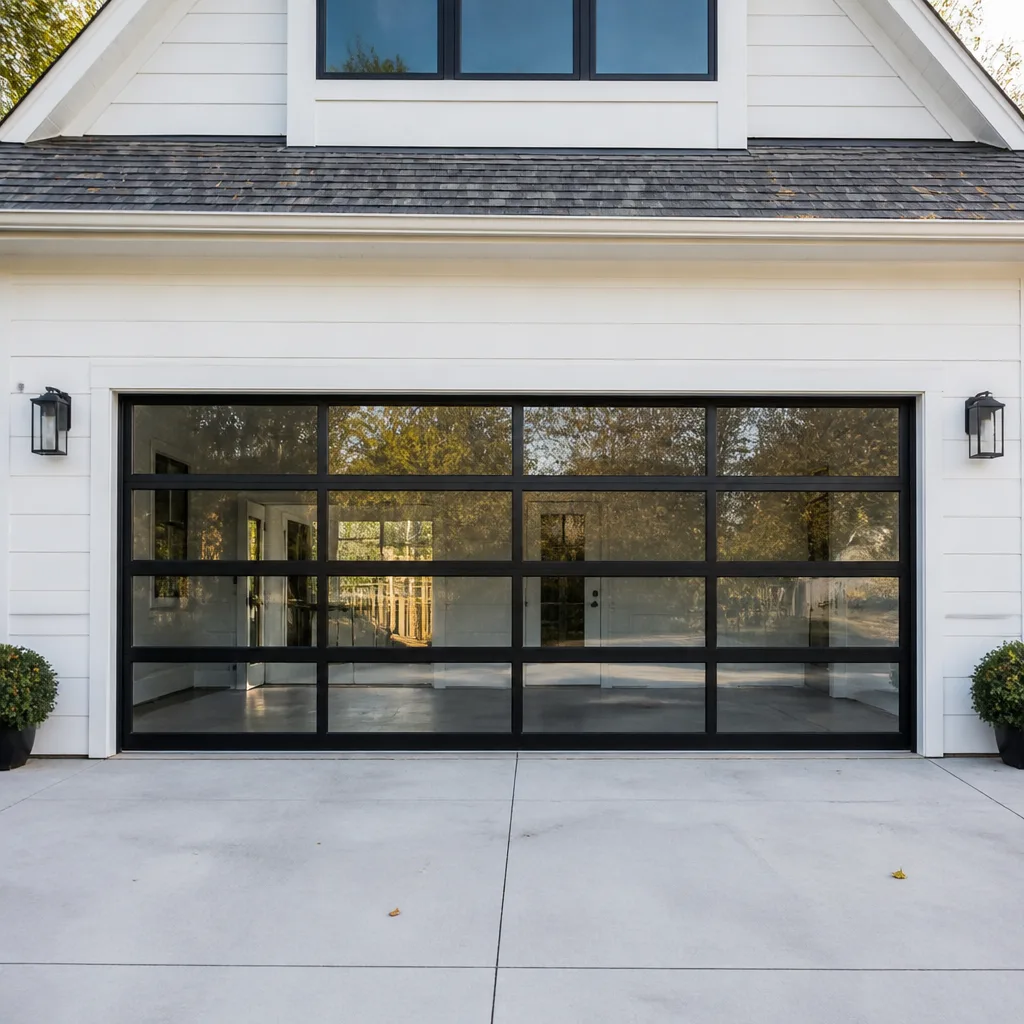 Full-view glass
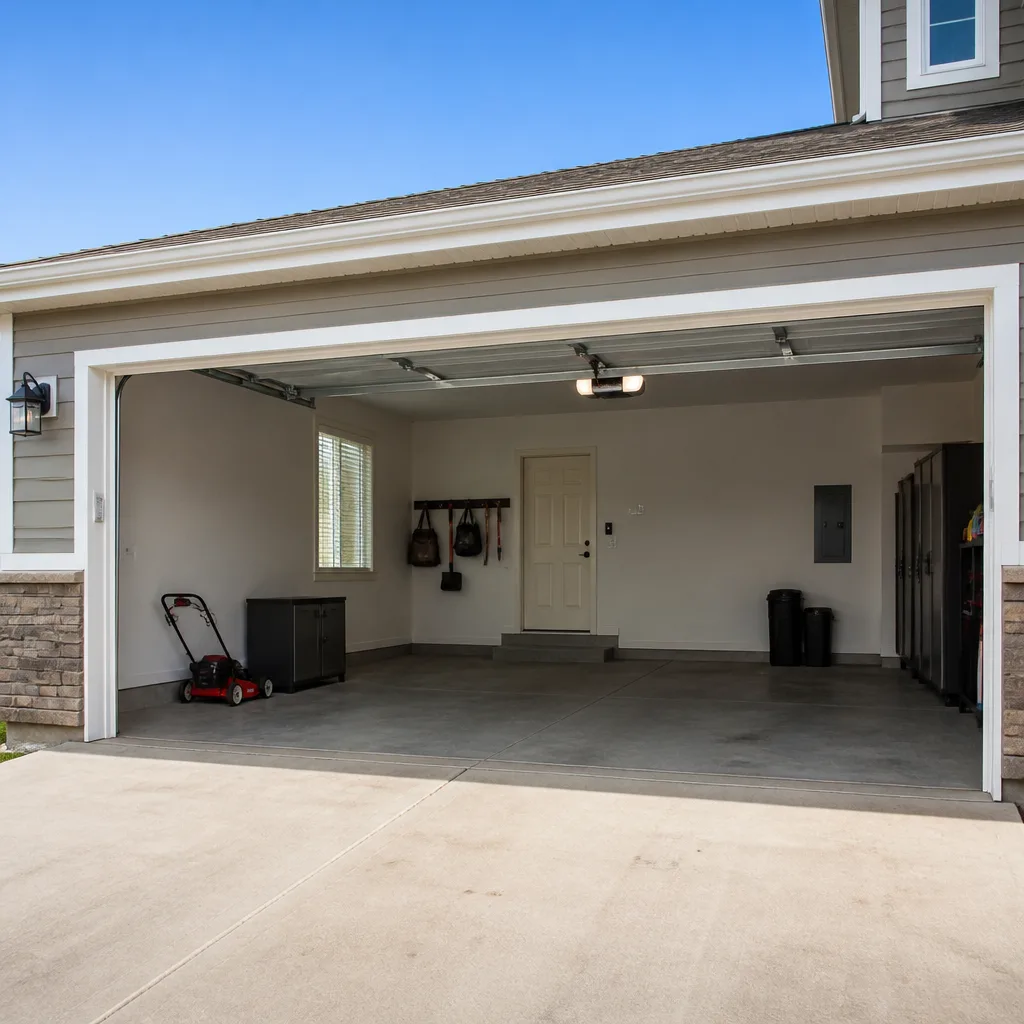 LiftMaster openers
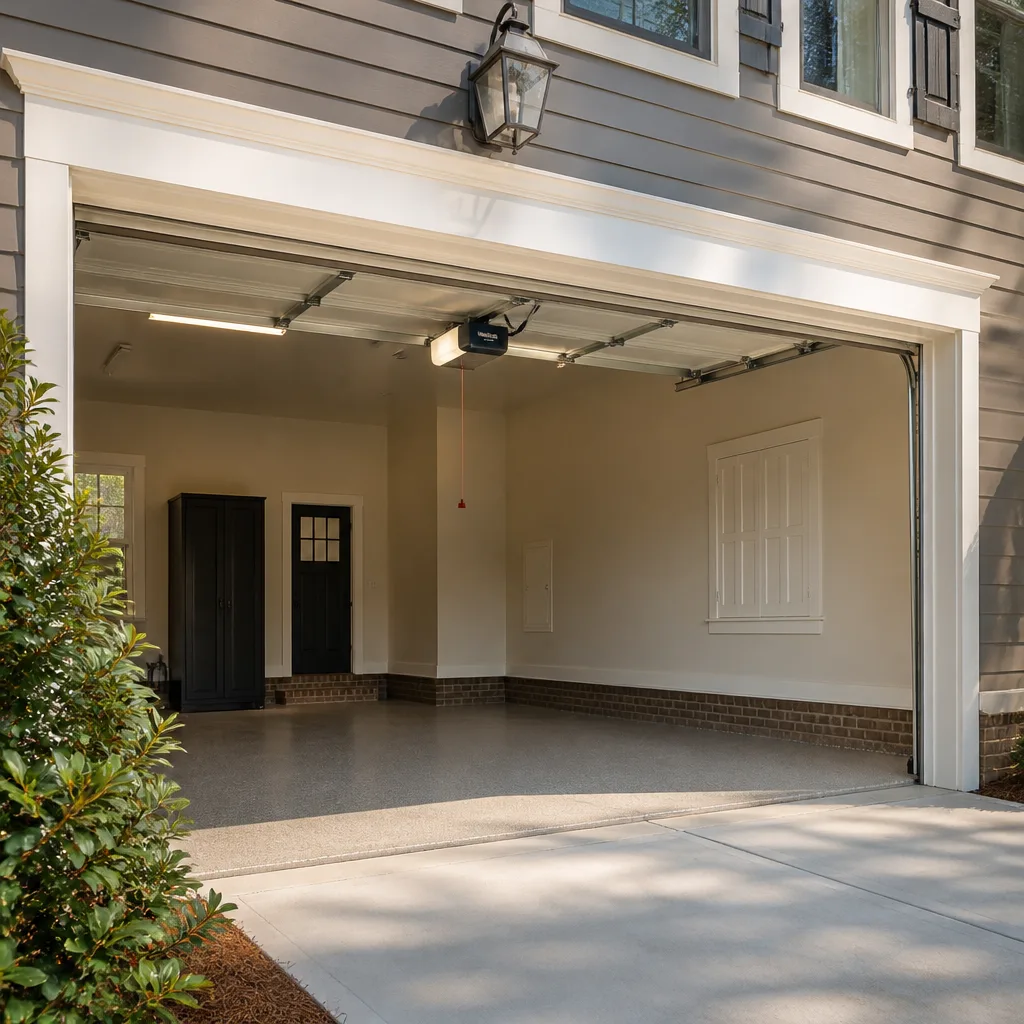 Chamberlain openers
Full 25-point door and opener safety check with every visit - springs, cables, rollers, tracks, and your LiftMaster or Chamberlain opener included
You get a price before we start. It does not change when the pro arrives.
Get your free estimateDIY vs Professional Garage Door: The Richmond Homeowner’s Decision Guide
Most DIY-versus-pro advice treats garage door work as one big category, and that’s the wrong frame. A torsion spring under tension stores enough energy to cause a serious injury in well under a second, while swapping a bottom seal or programming a new keypad carries essentially no risk at all. Those two jobs don’t belong in the same conversation, yet they get lumped together constantly. This guide draws the line task by task so you can make a specific call on each one instead of a blanket “hire it out” or “just watch a video.” We’ll cover what’s genuinely safe for a prepared Richmond homeowner, what isn’t, and where the money math actually lands. You’ll finish knowing exactly which jobs to take on and which to hand off.
Quick Answer
You can safely handle routine garage door maintenance in Richmond yourself: lubricating moving parts, replacing weather seals, tightening visible bolts, balancing the door by hand, and pairing a new remote or keypad. You should hand off anything involving torsion springs, cables, drums, bottom brackets, and the high-voltage side of an opener to a trained technician. Those parts are where the real injury risk lives and where a mistake can turn a simple repair into a full door replacement. Everything in between depends on which components you’d be touching.
Styles & brands we work with
- Raised-panel steel
- Carriage house
- Modern flush
- Full-view glass
- LiftMaster openers
- Chamberlain openers
Table of Contents
- The Definitive Task List: DIY vs. Call a Pro
- Why Torsion and Extension Springs Are Both Off-Limits
- The DIY Jobs That Are Actually Worth Doing
- The Cost Math: When DIY Saves and When It Costs More
- Virginia Liability: What Happens If a DIY Door Injures Someone
- Richmond Climate, Older Housing, and What It Means for Your Door
- When to Stop and Call a Professional
The Definitive Task List: DIY vs. Call a Pro
The clearest way to sort garage door work is by the stored energy in the part you’d be touching and whether a failure can drop the door. Some tasks carry neither risk. Others carry both.
Safe for a prepared homeowner
- Lubricating hinges, rollers, and tracks with a silicone or lithium-based lubricant, a few times a year
- Replacing the bottom weather seal, which slides out of its retainer and takes minutes
- Testing the balance of the door by hand (lift it manually and see whether it stays put)
- Cleaning the photo-eye lenses on the opener and checking that the door reverses under pressure
- Pairing a new remote, keypad, or smart-home module with your opener following the manufacturer’s steps
- Tightening visible bolts on the track brackets and hinges, using hand tools only
- Clearing debris from the tracks with a damp cloth and brushing out grit
Hand off to a trained technician
- Torsion spring replacement (the coil mounted above the door)
- Extension spring replacement (the springs that run along the horizontal tracks)
- Cable replacement or re-spooling
- Bottom bracket and drum work
- Adjusting the torsion spring tension to balance the door
- Repairing a bent or collapsed track
- Any wiring on the opener, the wall switch, or the opener’s power connection
- Replacing the opener itself, including the board and the limited safety-reverse system
The line falls where stored energy or electrical risk enters the job. On the safe side, the worst outcome of a mistake is a door that doesn’t seal or a remote that won’t pair. On the other side, the worst outcome involves injury. That’s a different category of risk, not a difference in difficulty.
Why Torsion and Extension Springs Are Both Off-Limits
Homeowners sometimes assume torsion springs are the dangerous ones and extension springs are the friendlier version. That’s a misread. Both store significant energy, and both are categorically different from every other garage door repair. A torsion spring holds tension along a winding bar; an extension spring under load can snap back along its track. Releasing either one without the right technique and restraint is how injuries happen. Neither is a first-timer’s project, and neither is a fifteen-minute favor you do for a neighbor.
Here’s why they’re genuinely different from the rest of the door. Springs are the counterweight. The motor only lifts a door that the springs have already balanced. When a spring breaks, the door’s weight is fully unsupported, and a technician’s job is to bring that weight back into balance without letting it drop. That work takes technique learned over hundreds of jobs. Our technicians have up to 11 years of experience, and spring repair is a dedicated named service for a reason: it’s the single most safety-critical piece of the door.
In our experience across Richmond homes, the spring damage we see most often is a split coil on the torsion spring above the door, or a stretched, overextended extension spring on older two-car garages. Both are routine for a trained technician and genuinely dangerous for anyone else. If you hear a loud bang from the garage and the door won’t lift, that’s a spring. Don’t pull the emergency release to “test” it. Call a professional and move anything valuable out from under the door in the meantime.
There’s a second reason extension springs deserve real caution: older doors often used them without a containment cable, the safety wire that runs through the center. When that cable is missing or corroded, a failing extension spring can whip across the garage. A technician replaces the spring and adds the containment cable in the same visit. That’s the kind of detail that a video won’t teach you, and it’s exactly the sort of safety item a trained eye catches.
The DIY Jobs That Are Actually Worth Doing
Most of the value of homeowner garage door work is in maintenance, not repair. These are the jobs that extend door life, prevent service calls, and carry no meaningful risk. The tools are basic.
What you’ll need: a silicone-based or lithium-based lubricant (not WD-40 in the blue can, which is a solvent), a screwdriver set, an adjustable wrench, a damp rag, and a short stepladder. For the bottom seal, a replacement seal cut to length with a utility knife.
The maintenance routine, step by step
- Lubricate the moving parts. Spray hinges, rollers, and the pivot points a few times a year. Keep the tracks clean but dry; grease in the tracks collects grit and wears the rollers faster.
- Test the balance. With the door closed, pull the emergency release, then lift the door by hand to about waist height. It should stay put. If it sinks or rises on its own, the springs are out of balance, and that’s a professional call.
- Test the safety reverse. Lay a piece of wood flat under the door, close it, and confirm the door reverses when it contacts the wood. Also check the photo-eye: pass a broom handle across the beam and the door should reverse.
- Check the bottom seal. Run a hand under the closed door. A visible gap lets in water and cold air, and Richmond’s humid summers make a worn seal a common source of moisture in the garage.
- Tighten visible fasteners. Hand-tighten bolts on the track brackets and hinges. Don’t crank them; over-tightening warps the track.
- Wipe down the tracks. A damp rag and a soft brush remove grit that jams rollers.
- Pair new remotes or a smart module. Follow the opener’s steps, usually involving a learn button. This is safe and takes minutes.
That routine takes an hour once or twice a year and prevents the most common service calls we get in Richmond: a door that’s drifted out of balance, a seal that’s failed, or an opener that’s lost its travel limits from cumulative wear. If your opener is a LiftMaster or Chamberlain with myQ, pairing the smart module is a two-minute job most homeowners can do.
The Cost Math: When DIY Saves and When It Costs More
DIY saves real money on routine maintenance and small parts. It almost never saves money on springs, cables, or openers, because a failed repair costs more than the original job. Here’s the honest breakdown.
- Bottom seal replacement: a replacement seal is inexpensive, and the job takes minutes. A clear DIY win.
- Lubrication and tightening: no parts cost, extends door life. Clear DIY win.
- Remote or keypad pairing: minutes, no risk. Clear DIY win.
- Spring replacement: a DIY attempt that goes wrong can mean a bent door panel, a damaged track, or worse, injury. A technician handles it in one visit with the door rebalanced and the cables checked. This is where DIY stops saving and starts costing.
- Opener replacement: a new opener from LiftMaster or Genie involves wiring, travel-limit setup, and safety-reverse testing. A miswired or mis-tuned opener is a safety problem, not a convenience problem.
The pattern holds across Richmond: the jobs that cost under $50 in parts and under an hour of time are worth doing yourself. The jobs where a single mistake can multiply the total are worth handing off. The written estimate from a professional sets the final price, so you know what you’re paying before anyone touches the door.
What a professional job typically involves
- Diagnosis: identify the failed component and check the related parts (cables, drums, rollers) at the same time
- Parts: a matched spring pair or the specific OEM replacement part for your door and opener brand
- Repair: replace the failed part and rebalance the door
- Verification: test the safety reverse, confirm the door seals and runs smoothly
Because we work with Clopay, Amarr, Wayne Dalton, Raynor, LiftMaster, Chamberlain, Genie, and Craftsman equipment, the correct part is usually identified on the first visit rather than a return trip. That matters for Richmond homeowners with older doors, where a guessed brand match often means a second appointment.
Virginia Liability: What Happens If a DIY Door Injures Someone
This is the part most DIY guides skip. If a self-installed or self-repaired garage door fails and injures someone, the homeowner’s exposure is not just the medical bill. Virginia homeowners’ policies commonly cover certain accidental injuries on the property, but they can exclude or limit coverage for work the homeowner performed improperly, especially if the work violated a building code or manufacturer instruction. Policies vary, so check your own, and a call to your insurer is a good idea before you take on anything structural.
The practical consequences stack up:
- Injury liability: a garage door that drops on a visitor or family member can become a personal injury claim, and a DIY repair history complicates the defense.
- Insurance coverage questions: many policies ask whether the work was done by a licensed professional. A self-installed door can complicate a claim.
- Disclosure on sale: Virginia sellers disclose known defects. An unpermitted or faulty garage door install can become a negotiation problem when you sell.
- Permits: most cities, Richmond included, require a permit for structural changes like a new door install. Ask Richmond’s building department what applies to your job before you start.
None of this means you shouldn’t touch your door. It means the calculation changes once you’re moving structural parts, springs, or electrical components. For a bottom seal or a remote pairing, the liability question doesn’t arise. For a spring, a cable, or an opener install, a professional invoice is also a record that the work was done correctly, which is worth something if a problem ever comes up.
Richmond Climate, Older Housing, and What It Means for Your Door
Richmond’s mix of humid summers, wet springs, and occasional hard freezes puts specific wear on garage doors. The humidity swells wood door panels and rusts steel hardware faster than in drier climates. The freezes crack seals and stiffen rollers. And the city’s older housing stock, especially in neighborhoods like the Fan District, Church Hill, and Ginter Park, means many garage doors are decades old and original to the house. That changes the DIY-versus-pro call in real ways.
- Wood doors: in Richmond humidity, wood panels swell and stick. Lubrication and a good seal go a long way, but warped panels often need a professional adjustment.
- Steel doors: rust on the bottom panel near the seal is common. A rusted bottom section on an older door usually needs a repair, not just a clean-up.
- Older openers: many Fan District and Church Hill garages still run Craftsman or Chamberlain openers from a previous era. Parts are often available, but a failing board or stripped gear is a professional repair.
- Uneven floors: older Richmond garages often sit on sloping or settled concrete. A door that seals on one side and gaps on the other is a track or balance adjustment, not a DIY fix.
Knowing your door’s age and type tells you which tasks you can safely do and which will likely turn into a professional call. If your door is a Wayne Dalton or an older Amarr, a professional can usually tell you in one visit whether the panels are worth repairing or whether the door is at the end of its life.
When to Stop and Call a Professional
Some situations don’t need a judgment call. If a spring is broken, a cable is frayed or off its drum, the door is hanging crooked, or the opener won’t reverse on contact with an object, that’s the point to stop and call. Those are safety-critical failures, and a technician with the right tools can typically get you back up and running today. For a full opener or door replacement, the right next step is a free measure and a written price, not a same-day repair.
Richmond Garage Door Repair Experts offers free estimates in Richmond – call (866) 490-7906. We answer 24/7. Fast dispatch from 7am to 7pm, Sunday through Friday. We’re closed Saturday; a call outside dispatch hours is booked into the next opening.
Common Mistakes to Avoid
- Pulling the emergency release on a door with a broken spring. With the spring failed, the full weight of the door is unsupported, and releasing it can drop the door fast. Leave it closed and call.
- Using WD-40 as lubricant. It’s a solvent, not a lubricant, and it dries out the hinges and rollers. Use silicone or lithium-based spray.
- Greasing the tracks. Grease collects Richmond grit and wears the rollers faster. Tracks should be clean and dry.
- Tightening track bolts by hand with a wrench and no feel. Over-tightening warps the track and creates a new alignment problem. Hand-tight is the rule.
- Assuming a bottom-seal gap is cosmetic. In Richmond’s humid summers, a failed seal lets moisture in and rusts the bottom panel. Replace it early.
- Buying an opener at a big-box store and installing it yourself. The wiring, travel limits, and safety reverse are the parts that go wrong, and a mis-tuned opener is a safety hazard, not a convenience issue.
- Ignoring a two-inch gap on one side of the door. That’s usually an out-of-balance spring or a bent track, not a seal problem. Get it checked before it damages the panels.
See the difference
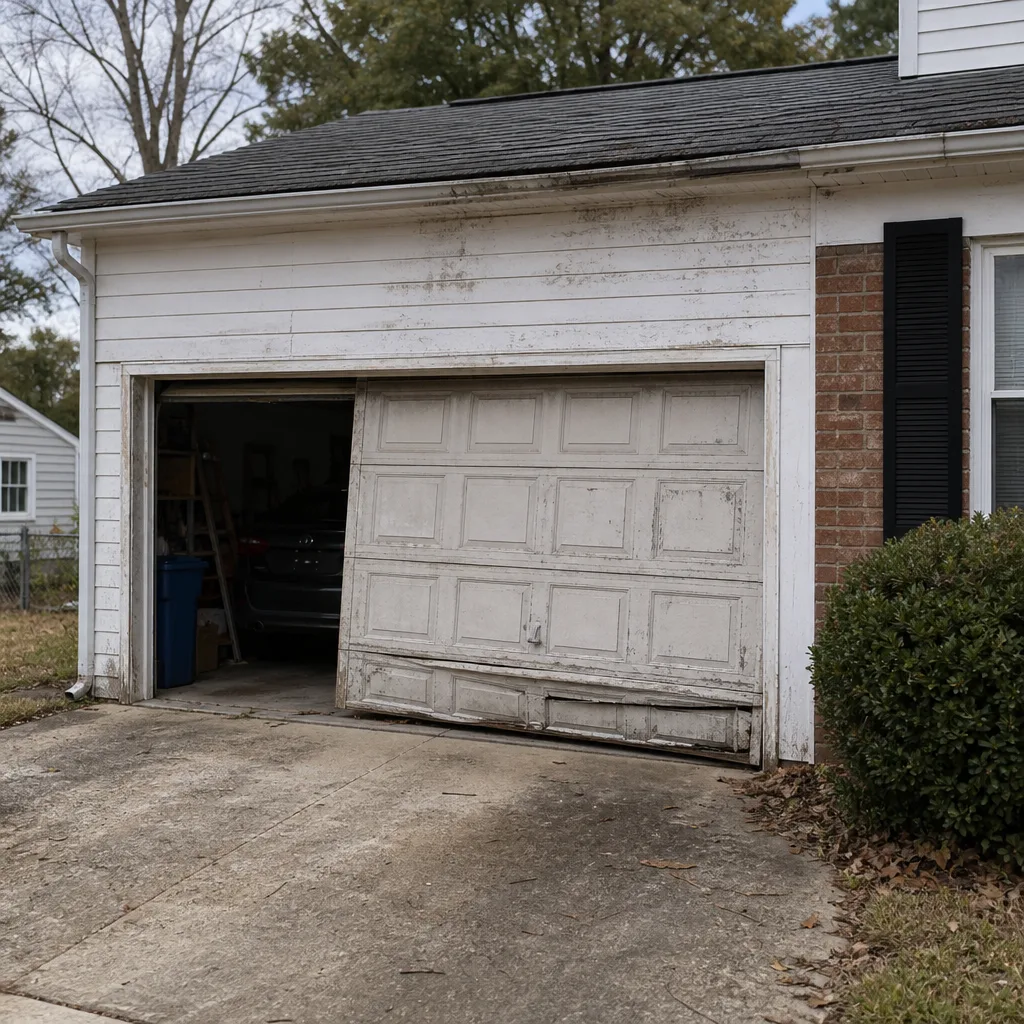 Before
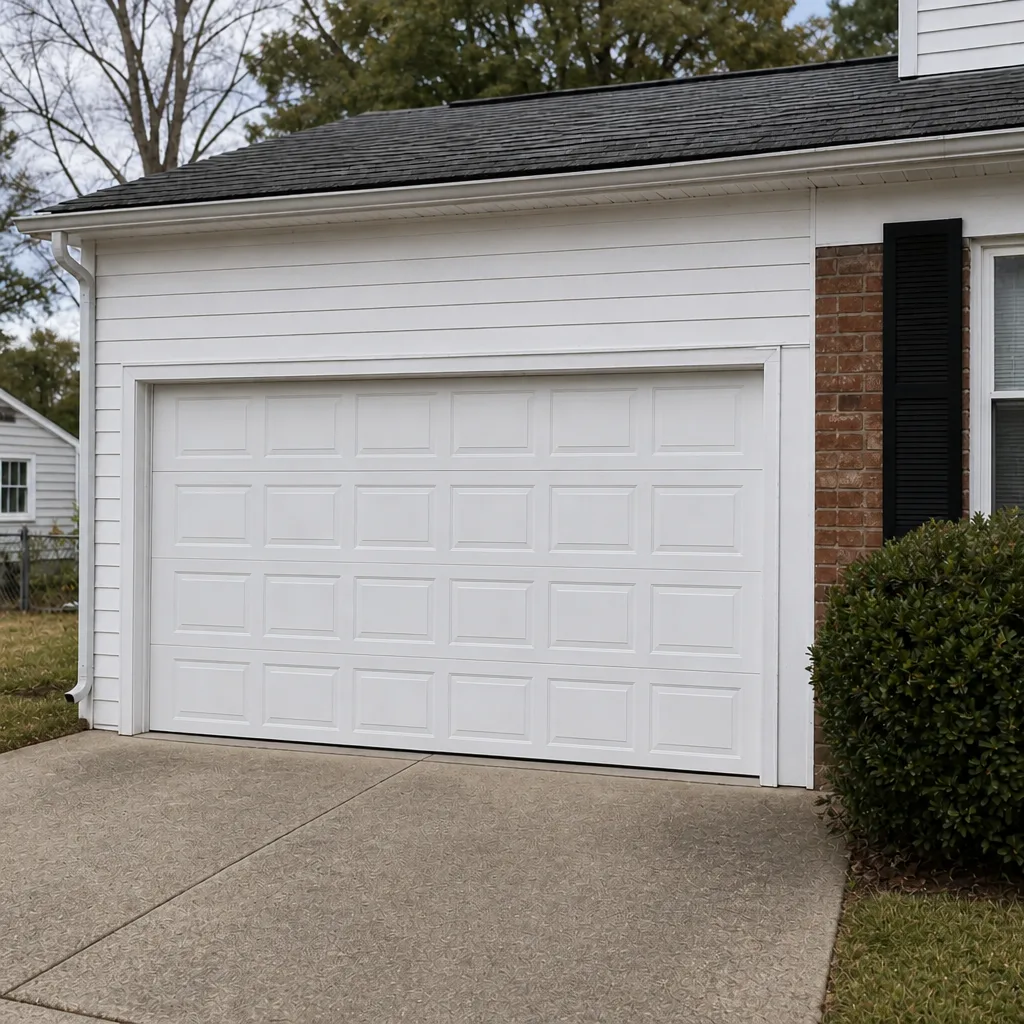 After
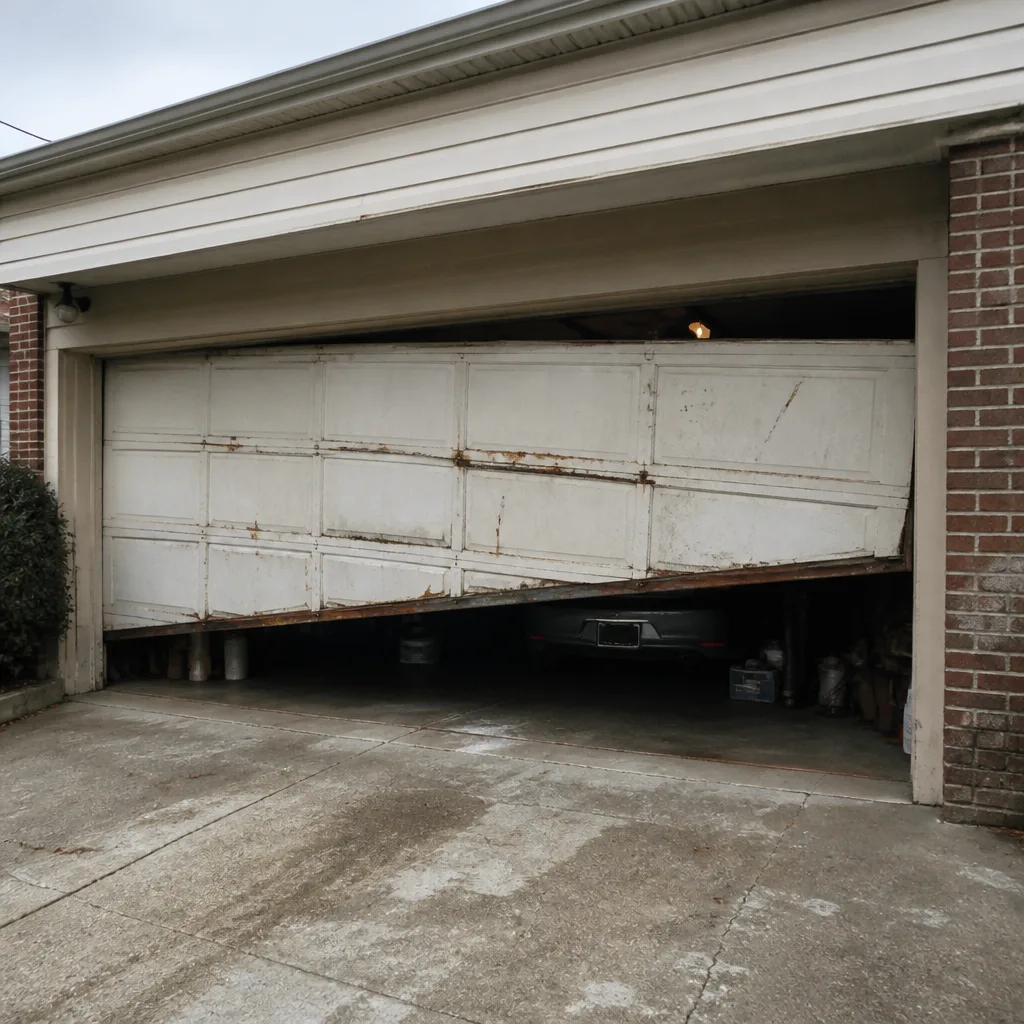 Before
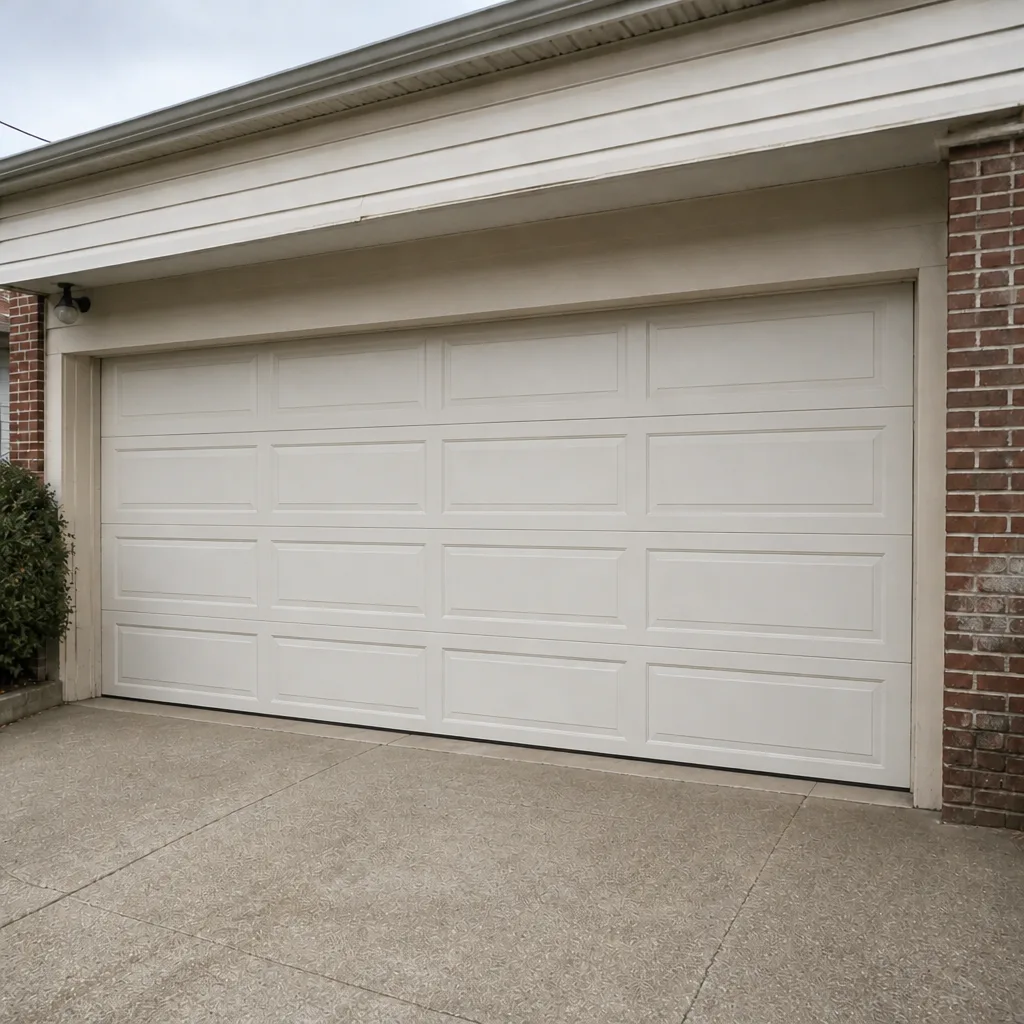 After
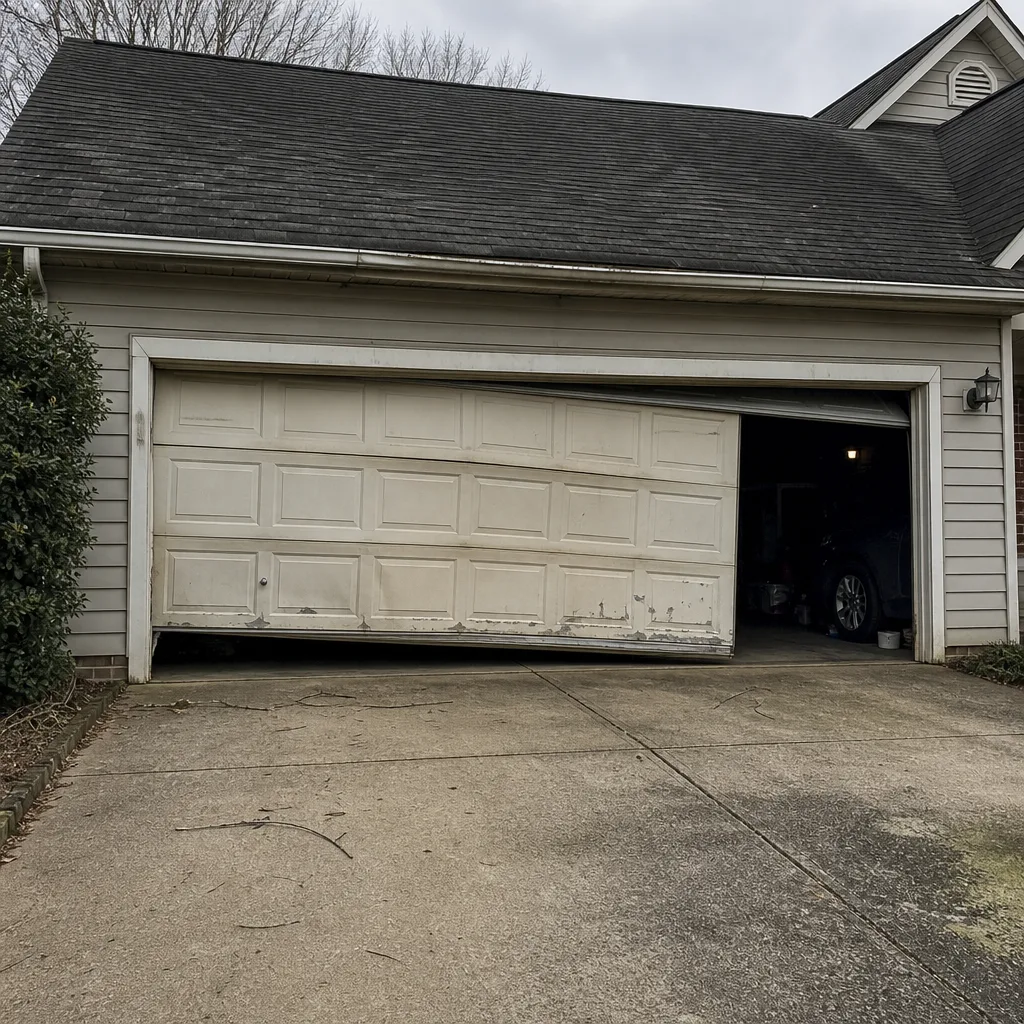 Before
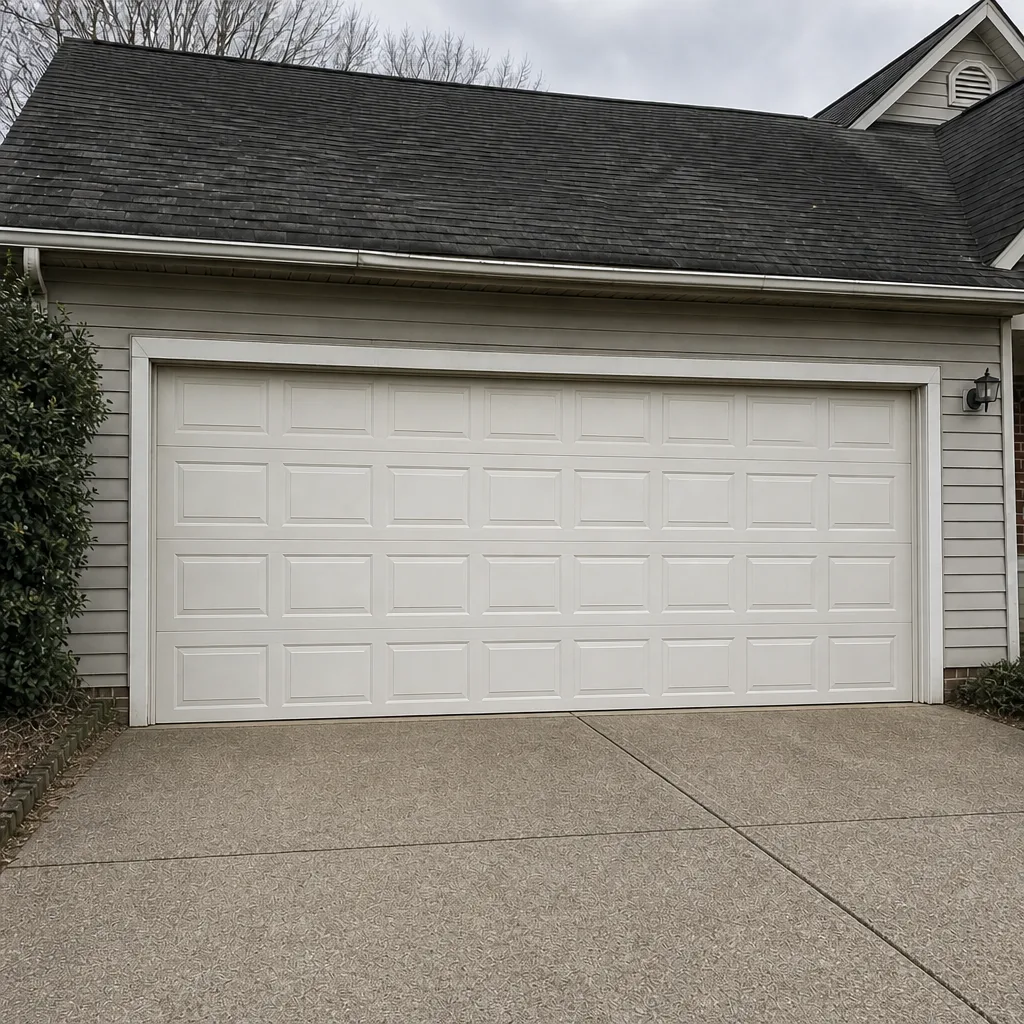 After
When to Call a Professional
Call when the job involves a spring, cable, drum, bottom bracket, bent track, or opener wiring. Also call if the door is heavier than usual to lift by hand, if it reverses unevenly, or if the opener’s safety reverse doesn’t trigger on contact with an object. Those are genuine safety failures. For door and opener replacement, the next step is a free measure and a written price, and the estimate is free. We handle garage door spring repair as a dedicated service with trained technicians. Our technicians have up to 11 years of experience and work with Clopay, Amarr, Wayne Dalton, Raynor, LiftMaster, Chamberlain, Genie, and Craftsman equipment. Call (866) 490-7906. We answer 24/7. Fast dispatch from 7am to 7pm, Sunday through Friday. Closed Saturday.
Frequently Asked Questions
No, torsion and extension spring replacement is not a safe DIY job. Both types store enough energy to cause serious injury, and releasing them without the right restraint risks the door dropping. A trained technician replaces the spring, rebalances the door, and checks the cables in the same visit. Call (866) 490-7906 for a free estimate.
You can safely lubricate hinges and rollers, replace the bottom weather seal, test the balance and safety reverse, tighten visible bolts, clean the tracks, and pair a new remote or smart module. Those tasks carry no meaningful injury risk and prevent the most common service calls. Anything involving springs, cables, drums, or opener wiring should go to a professional. Call (866) 490-7906 for a free estimate.
No, the price you agree to in the written estimate is the price. We look at the door, identify what failed, and give you a written price before any work starts. If something additional turns up, we tell you before we touch it. Call (866) 490-7906 for a free estimate.
It depends on your policy, and often the coverage gets complicated when the work was done by the homeowner rather than a licensed professional. Check with your insurer before taking on any structural or electrical garage door work. A professional invoice also gives you a record that the work was done correctly. Call (866) 490-7906 for a free estimate.
Yes, the local pro we connect you with is licensed and insured as their state requires. We work with trained technicians who have up to 11 years of experience on Clopay, Amarr, Wayne Dalton, Raynor, LiftMaster, Chamberlain, Genie, and Craftsman equipment. Call (866) 490-7906 for a free estimate.
Same-day repair is available for most breakdowns, including broken springs, cables, and opener failures. Call (866) 490-7906. We answer 24/7. Fast dispatch from 7am to 7pm, Sunday through Friday. We’re closed Saturday; a call outside dispatch hours is booked into the next opening. The estimate is free and the price is agreed before any work starts.
The Bottom Line
The DIY-versus-pro question has a clear answer once you sort by risk, not difficulty. Lubrication, seals, balance testing, and remote pairing are safe, cheap, and worth doing yourself; they extend door life and prevent service calls. Springs, cables, drums, and opener wiring carry real injury risk and real liability exposure, and a botched DIY attempt costs more than the original professional repair would have. Richmond’s humidity and older housing stock make the maintenance worth keeping up with. When a job falls on the risky side, garage door repair with a trained technician is the right call, and for a replacement, a free measure and a written price come first.
From a single bottom seal to a full garage door installation, and from garage door opener repair to emergency service when the door won’t close, Richmond Garage Door Repair Experts handles each stage. Garage doors are all we do, and that focus is the reason the task line in this guide is clean. When you’re ready to hand the risky jobs off, call (866) 490-7906 for a free estimate. We answer 24/7. Fast dispatch from 7am to 7pm, Sunday through Friday. Closed Saturday.
Written by the team at Richmond Garage Door Repair Experts.