
Last updated November 21, 2026
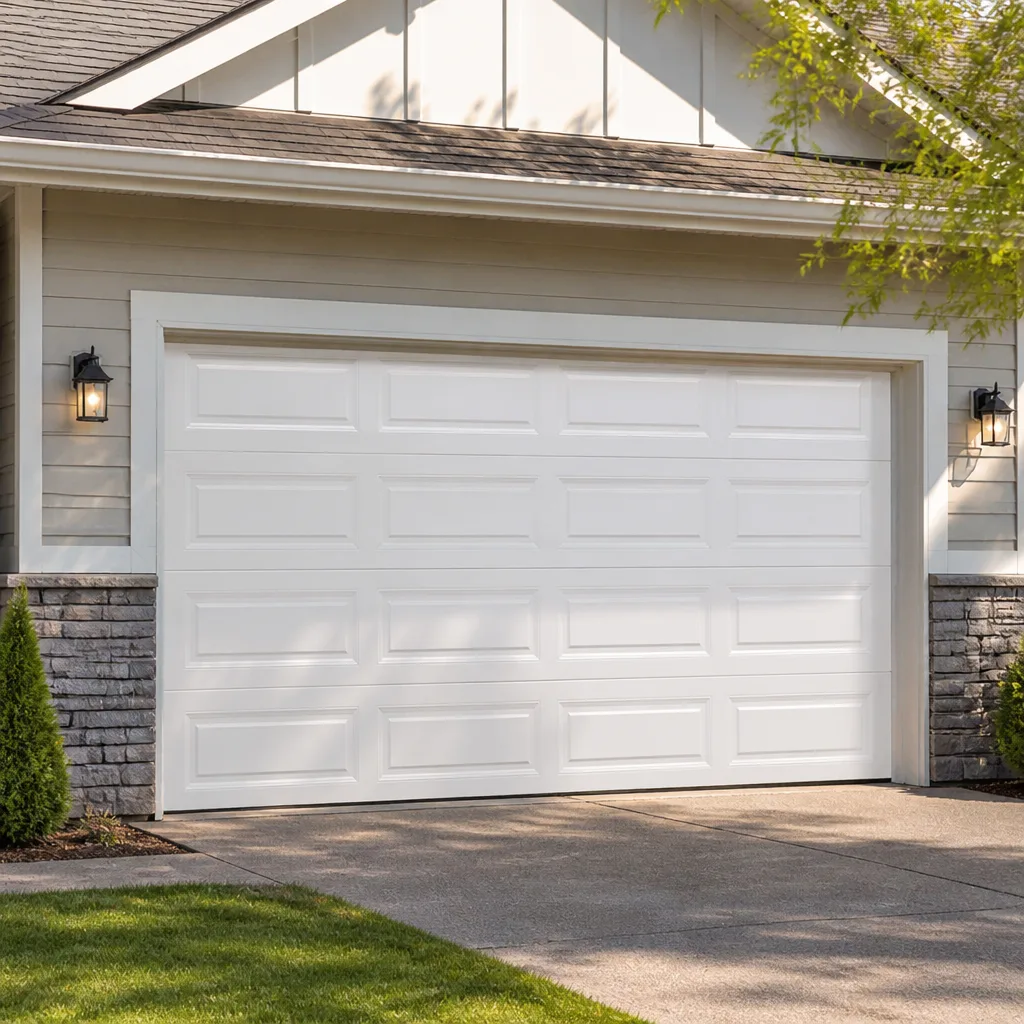 Raised-panel steel
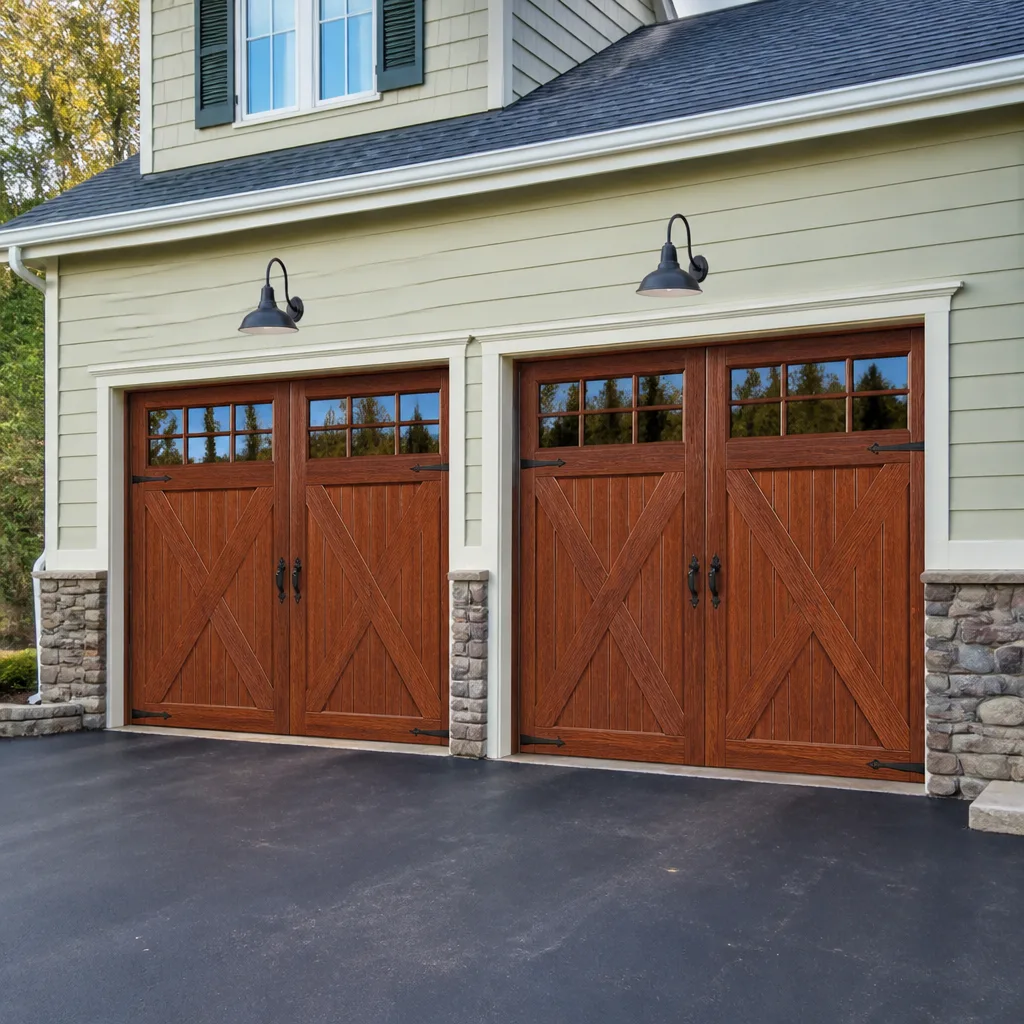 Carriage house
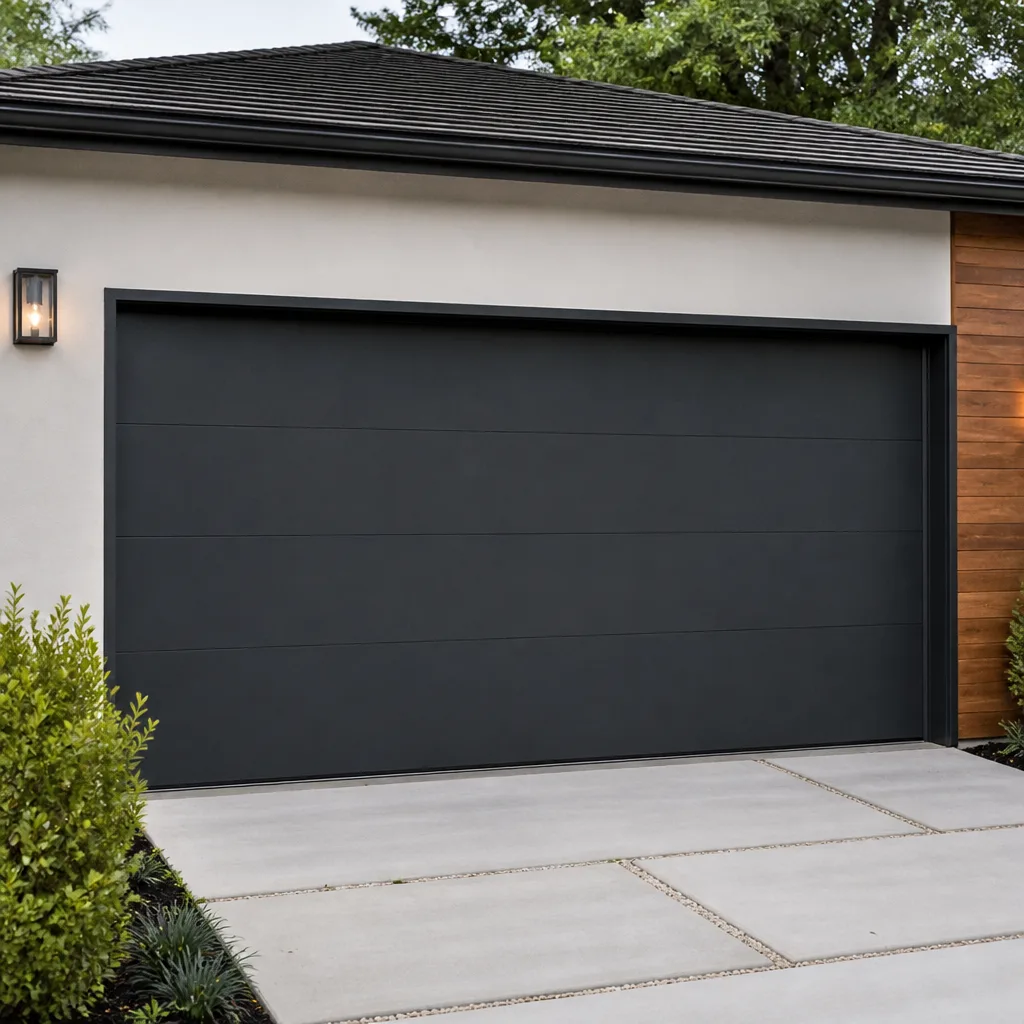 Modern flush
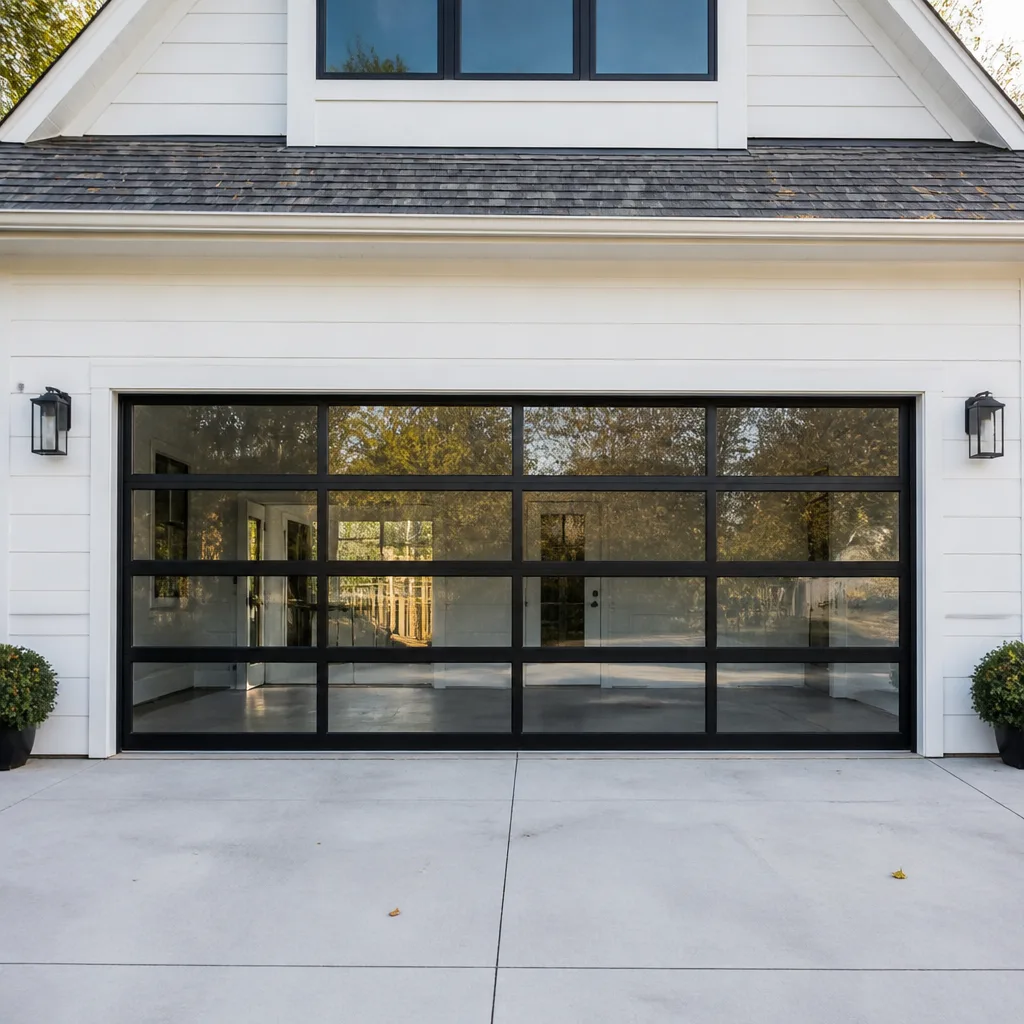 Full-view glass
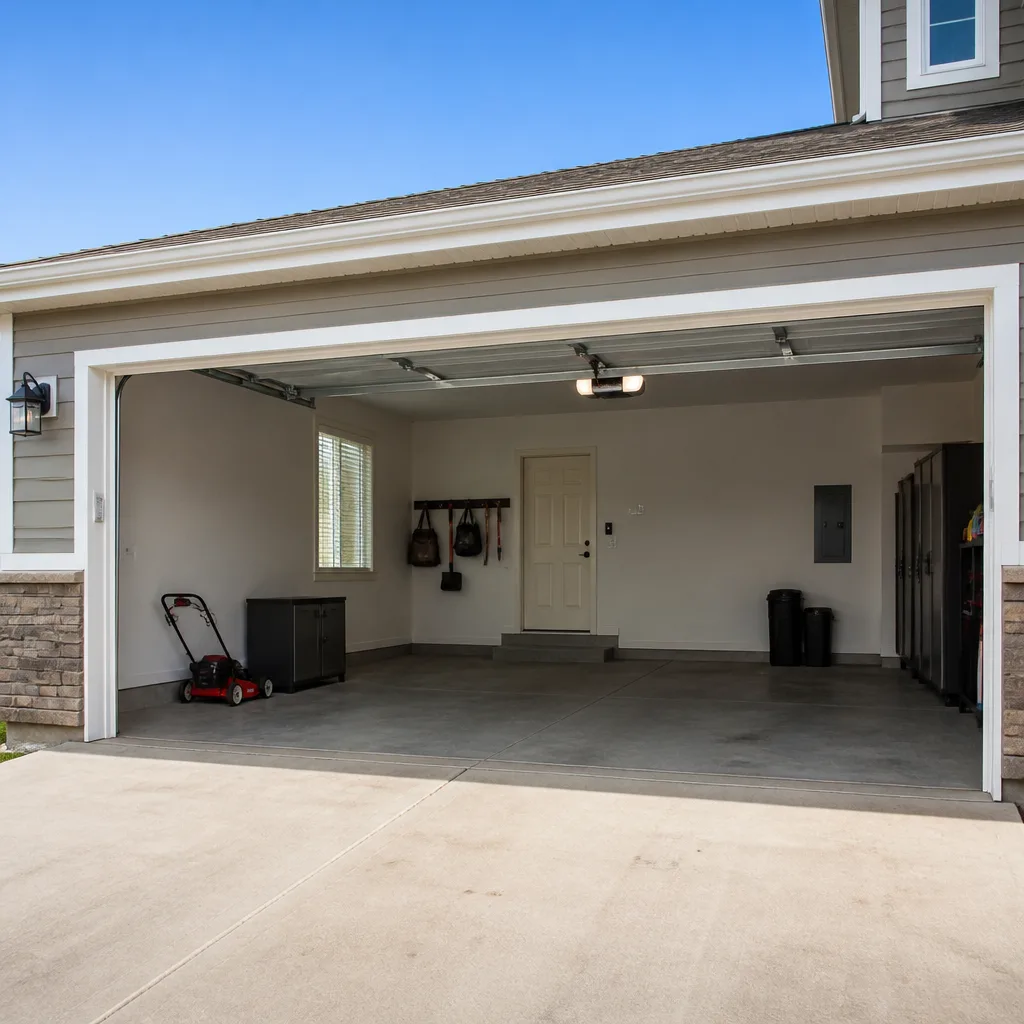 LiftMaster openers
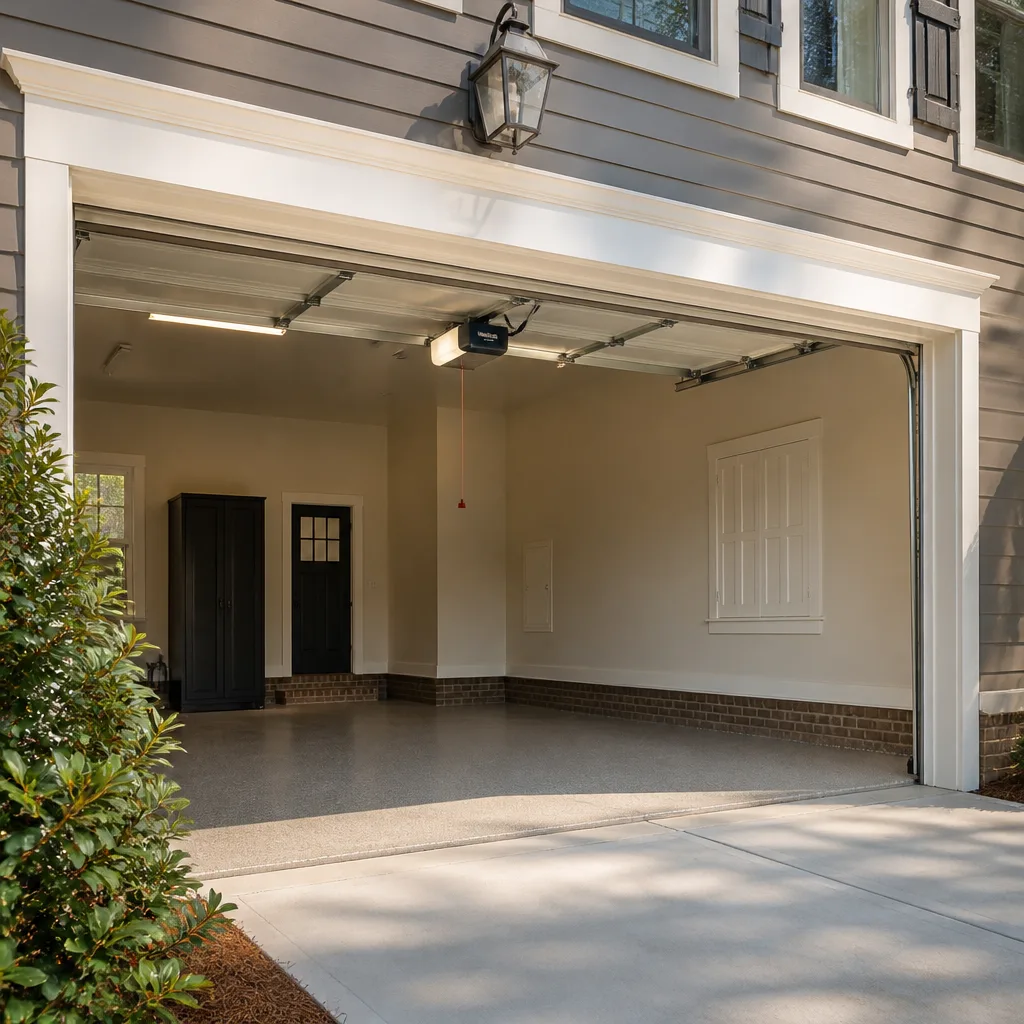 Chamberlain openers
Full 25-point door and opener safety check with every visit - springs, cables, rollers, tracks, and your LiftMaster or Chamberlain opener included
You get a price before we start. It does not change when the pro arrives.
Get your free estimateGarage Door Permits, Codes & Inspections in Richmond, VA: What You Need to Know
Most Richmond homeowners assume garage door work is like swapping a light fixture: nobody asks for paperwork. That’s wrong in one specific case and right in almost every other. Replacing a door as part of a permitted structural or energy retrofit can pull you into the Virginia Uniform Statewide Building Code, while repairing a broken spring, cable, roller or opener almost never does. This guide covers where that line actually sits, how Richmond City, Henrico County and Chesterfield County handle the same job differently, what the energy documentation looks like, and how an unpermitted replacement can surface at inspection and at closing. You’ll finish knowing exactly when you need a permit in Richmond.
Quick Answer
In Virginia, a garage door replacement usually requires a permit when it’s part of a larger permitted project, a structural alteration, or a replacement that must meet the energy code; a garage door repair (springs, cables, rollers, opener, tracks, panels) generally does not. The jurisdiction issuing the permit – Richmond City, Henrico County or Chesterfield County – sets the process, the documentation and the inspection sequence for the same scope of work. When in doubt, ask the building department before the door is ordered, not after.
Styles & brands we work with
- Raised-panel steel
- Carriage house
- Modern flush
- Full-view glass
- LiftMaster openers
- Chamberlain openers
Table of Contents
- When Virginia Requires a Permit for Garage Door Work
- Richmond City vs. Henrico vs. Chesterfield Permit Differences
- Energy Code Compliance for Replacement Doors
- What the Inspector Actually Looks At
- How Unpermitted Work Shows Up at Inspection and Title
- What Remediation Actually Costs
- A Step-by-Step Permit Process for Richmond Homeowners
- Why Richmond’s Climate Shapes Garage Door Longevity
When Virginia Requires a Permit for Garage Door Work
The Virginia Uniform Statewide Building Code is the hook most homeowners don’t know exists. It applies broadly, but it doesn’t apply to every garage door visit. The distinction that matters is repair versus replacement, and whether the replacement is part of something bigger.
Here’s the practical breakdown we walk Richmond callers through before anyone picks up a wrench:
- Repairs generally don’t need a permit. Swapping a broken torsion spring, replacing a frayed cable, fixing rollers, aligning tracks, replacing a bent section, or repairing or replacing an opener motor – none of these typically trigger a permit. They’re maintenance on an existing assembly.
- Like-for-like replacement is a gray zone. Replacing a door with one of the same size, the same opening and the same energy performance often doesn’t require a permit, but some jurisdictions will ask for a simple trade permit if the door’s wind rating or fire rating changes.
- Replacement as part of a permitted project does need one. If the door is going in during a remodel, an addition, a garage conversion, or a structural repair to the opening, the door scope is included in that permit and inspected under it.
- Attached-garage fire separation matters. Doors that separate an attached garage from living space must maintain the required fire separation. When that assembly changes, the inspection will look at it.
- Change of use or new construction always needs one. New garages, converted garages and doors that change the envelope of the building go through a full permit.
If your door is between categories, one question to the building department settles it faster than a guess. Ask them, “If I replace one garage door of the same size with no structural change, does that need a permit here?” The answer is typically no for a straight swap, yes if you’re touching the opening, and yes if the door has to document its energy performance.
Our garage door repair technicians handle the repair side of this every day. When a Richmond job tips into replacement territory that needs paperwork, we tell you before the work begins, not after.
Richmond City vs. Henrico vs. Chesterfield: How the Same Job Gets Three Different Answers
Three jurisdictions, three processes, one door. This is where most homeowner confusion starts. The scope of work doesn’t change based on which side of the city line you live on, but the permit application, the documentation and the inspection timeline do.
Richmond City
Richmond City Building Services handles permits for the city proper, including neighborhoods like the Fan, Church Hill, Bellevue, Carytown, the Museum District, Oregon Hill and Manchester. Older housing stock is the dominant factor here – many homes have garages that predate the current building code, and any replacement that touches the opening has to account for what’s already there. The permitting process runs through the city’s online permitting system, and inspections are scheduled through the same portal.
Henrico County
Henrico County runs its own building department for unincorporated Henrico, covering areas like Short Pump, Glen Allen, the West End, Lakeside and Highland Springs. Henrico’s permitting process moved online, and for straightforward replacement work the county is often faster to review than city and county peers because the volume of small residential permits is higher. The paperwork expectations are similar to Richmond City but the inspection scheduling is different – Henrico often has shorter turnaround windows for a residential trade inspection.
Chesterfield County
Chesterfield County Building Inspections handles Chesterfield, including Midlothian, Bon Air, Brandermill, the Robious Road corridor and the Swift Creek area. Chesterfield sees more newer construction than Richmond City, so a replacement door here usually has a cleaner paper trail of the original install – which makes the energy documentation easier to produce. Chesterfield’s permitting portal accepts most residential applications online, and inspections are scheduled through the same system.
What this means for you
If you call a general contractor and ask “do I need a permit for a garage door in Richmond?”, you’re likely to get a guess based on their last job in a completely different county. That’s why we ask which jurisdiction the house sits in before we talk about door options. The answer to “what’s the process” depends entirely on which building department will be doing the inspecting.
Energy Code Compliance for Replacement Doors in Richmond, VA
This is the part that catches homeowners by surprise. Virginia adopts the International Energy Conservation Code, and the specific edition in force changes every few cycles. For a garage door on a conditioned space or an attached garage, the door must meet the envelope requirements in whatever edition is currently adopted in Virginia and enforced by your jurisdiction.
What documentation looks like
When a permit is required for a replacement door, the inspector will want to see that the installed door meets the code’s U-factor requirement for its position in the building envelope. That means one of:
- The manufacturer’s published U-factor and R-value for the specific door model, typically provided on a product data sheet or the National Fenestration Rating Council (NFRC) label, where applicable.
- The model number on the permit application, matched to the installed door on the job site.
- Written documentation that the door is not part of the conditioned envelope – for a detached garage with no heating or cooling, the energy requirement often doesn’t attach, but you need to know that going in.
In our experience, the opening inspection is where the paperwork problem surfaces. The door gets installed, the inspector arrives, and the U-factor on the label doesn’t match what was submitted. That’s a re-inspection and a delay. We work with Clopay, Amarr, Wayne Dalton and Raynor door models, and we know which ones come with the documentation the inspector wants before the door gets ordered.
Why the U-factor matters in Richmond
Richmond has real seasons. Summer humidity, winter cold snaps, and shoulder seasons where neither the heat nor the AC runs clean. An attached garage door that isn’t insulated is a heat bleed in January and a humidity source in July. Beyond the code compliance question, a door with the right U-factor for our climate actually performs differently in the house. Whether you go with an insulated door or not is a choice – whether the door must document its rating is a code question.
When it’s time to spec a replacement, our garage door installation team will walk you through the door options that meet your jurisdiction’s energy requirements and match the opening you already have.
What the Inspector Actually Looks At
For a permitted garage door replacement, the inspection is typically short – a 15 to 30 minute visit – but the sequence varies by jurisdiction. Here’s the general shape of it:
- Rough-in inspection (when applicable). If the replacement requires removing the old door and reworking the opening, the rough-in inspection happens after the frame and header work and before the door goes up. Most straight replacements skip this step.
- Final inspection. After the door is installed, the inspector checks the mounting, the balance, the safety features and the documentation. This is the inspection most Richmond-area homeowners actually see.
- What’s checked at final: The door’s model and rating match the permit; the door is fully seated in the opening; the torsion spring and cables are correctly anchored; the opener’s photo-eye safety sensors are installed, aligned and reversing properly; the manual release works; the door balances when disconnected from the opener; the hardware is secured to structural framing, not just to drywall or trim.
- Fire separation check (attached garages). The wall and door between the garage and the living space must maintain the required fire separation. The inspector will look at the door, any penetrations and the surrounding wall.
- Sign-off. Once the inspection passes, the permit is closed and the record exists. In every one of the three jurisdictions, that record is what shows up in a title search.
How long the inspection takes in each jurisdiction
Richmond City inspections are typically scheduled through the online portal and land within a few business days of the request, though the timing shifts with seasonal permit volume. Henrico County tends to have the shortest turnaround for a straightforward residential final, often within a business day or two. Chesterfield County runs a similar window. We can’t promise a specific inspection date on your behalf – only the jurisdiction can – but we do build the schedule around when the inspector is expected, so the door is up and documented when they arrive.
How Unpermitted Garage Door Work Shows Up at Inspection and Title
A closed permit is a public record. An unpermitted replacement is not – and that’s the problem. When a home in Richmond goes under contract, the buyer’s inspector and the title company both look at what was done to the house and whether it was permitted.
At the home inspection
The inspector checks the door’s label and documentation against the home’s records. If the home has an energy compliance record on file for the original build or a past renovation, and the new door’s U-factor doesn’t match it, the inspector will note the discrepancy. This doesn’t automatically fail an inspection, but it does put a question mark in the report, and that question mark becomes a negotiation point.
At the title search
Title companies pull the property’s permit history. A garage door replacement done without a permit shows up as work with no record. The title company may require the seller to obtain a retroactive permit and inspection, or the buyer’s lender may require it before closing.
What it costs to fix later
Remediating an unpermitted replacement is usually more expensive than permitting it correctly the first time. The door may need to be partially removed and reinstalled to let the inspector see the framing and the mounting. Documentation for the correct U-factor has to be produced. A re-inspection fee gets paid. And the original labor cost doesn’t go away – it’s already been spent. The cleanest path is to ask the permit question before the door is ordered.
What Remediation Actually Costs
We don’t quote permit fees because every jurisdiction sets its own and the fee depends on the job scope. What we can be specific about is the door work, because that’s ours.
| Item | Typical Richmond-Area Range | Notes |
|---|---|---|
| Torsion spring replacement (one spring) | Usually quoted per spring by written estimate | Most doors use a matched pair; a pair costs about twice a single spring |
| Cable, roller, hinge, track repair | Quoted per job by written estimate | Price depends on the door size and hardware condition |
| Opener repair or replacement | Quoted per job by written estimate | Covers LiftMaster, Chamberlain, Genie and Craftsman systems |
| New door installation | Quoted per job by written estimate, door and hardware included | Price varies with size, insulation, glazing and brand |
| Permit fees and inspection fees | Set by your jurisdiction | Paid to the city or county, not to us |
| Re-inspection fee (if required) | Set by your jurisdiction | Charged when the first inspection doesn’t pass |
Every price we give is set by a written estimate and agreed before any work starts. If the door needs a permit, the permit fee is separate and paid to the jurisdiction – we’ll tell you which office to contact and what documentation to have ready. The written quote is the price, and it doesn’t change once work begins unless the door you ordered is a different size or spec than what was measured.
For opener problems on an existing door – the kind that don’t need a permit – our garage door opener repair team can diagnose and quote the same visit.
A Step-by-Step Permit Process for Richmond Homeowners
Here’s the order of operations for a permitted garage door replacement in Richmond City, Henrico or Chesterfield. The exact forms change, the sequence doesn’t.
- Confirm the door’s energy requirement. Find out from your jurisdiction whether the replacement must meet a U-factor requirement, and if there’s an existing energy compliance record for the home.
- Choose the door and capture the documentation. Select the door model, then pull the manufacturer’s data sheet with the U-factor, the model number and (where applicable) the NFRC rating. Whether you’re going with a Raynor, a Clopay or a Wayne Dalton door, the doc lives with the model number.
- Submit the permit application. Richmond City, Henrico County and Chesterfield County each have an online portal for residential trade permits. Submit the door model, the energy documentation and the scope of work.
- Pay the permit fee. The fee goes to the jurisdiction. Ask for the receipt and save it – you’ll want it when you sell.
- Schedule the installation after the permit is issued. Most jurisdictions require the permit in hand before work starts. Installing before the permit opens the door to an after-the-fact problem.
- Schedule the inspection. When the door is installed, request the final inspection through the same portal. Richmond City, Henrico and Chesterfield all run inspection scheduling the same way.
- Attend the inspection if you can. The inspector will want to see the U-factor label on the door match the permit. If you’re present, you can point it out.
- Keep the closed permit in your home file. The signed-off permit is what you produce at inspection and at closing. It’s the paper trail that closes the loop.
We tell every Richmond homeowner the same thing: the permit process is a couple of phone calls and one inspection. Skipping it is what costs money later.
Why Richmond’s Climate Shapes Garage Door Longevity
Richmond sits in a humid subtropical climate with four distinct seasons – hot, sticky summers and cold winters that dip below freezing often enough to matter. That cycle does real work on a garage door.
What the weather does to the mechanism
- Humidity swells wood doors and rusts steel components. A door that was installed in March can fit differently by August. Routine lubrication on rollers, hinges and springs prevents most of the friction that builds up.
- Winter cold makes springs brittle. A torsion spring that’s nearing the end of its cycle life is more likely to break on the first stretch of sub-freezing mornings. Most spring failures in Richmond happen in a cold snap.
- Summer heat stresses opener motors and photo-eye sensors. Openers in garages that aren’t climate-controlled run hotter than their rating, and photo-eye sensors go out of alignment when thermal expansion moves the frame.
- Storm seasons test weather seals. The bottom seal and side seals degrade faster in a climate with a wet spring and a wet fall than they do in a dry climate.
What it means for the door you install
When you replace a door in Richmond, insulation isn’t decoration. An insulated door with a documented U-factor handles the summer humidity and the winter cold better than an uninsulated one, and the documentation is exactly what the inspector wants to see at final. That’s true whether you’re in an older house in the Fan or a newer build out in Short Pump.
Common Mistakes to Avoid
- Assuming garage door work never needs a permit. Repair usually doesn’t, but a replacement tied to a larger project does. Ask before you order.
- Assuming the same rules apply everywhere in the metro. Richmond City, Henrico and Chesterfield each have their own process. A general contractor’s answer from a job in Henrico might not apply to a house in Chesterfield.
- Buying a door without the U-factor documentation. The model number on the permit needs to match the label on the installed door. If the door arrives without docs, the final inspection can’t be signed off.
- Installing before the permit is issued. Some jurisdictions allow installation to start while the permit is in review; most don’t. Installing first can force a retroactive permit and a re-inspection.
- Losing the closed permit after the inspection. You’ll need it at title search. Keep it with the same file as your property survey and your closing documents.
- Skipping the energy question on an older Richmond home. Some city homes predate any energy compliance record. The inspector will ask what code cycle the door needs to meet, and you’ll want the answer before the door goes up.
- Choosing a door that ignores the weather. An uninsulated door in Richmond’s humidity and cold is a harder sell at resale than an insulated door with a documented rating.
See the difference
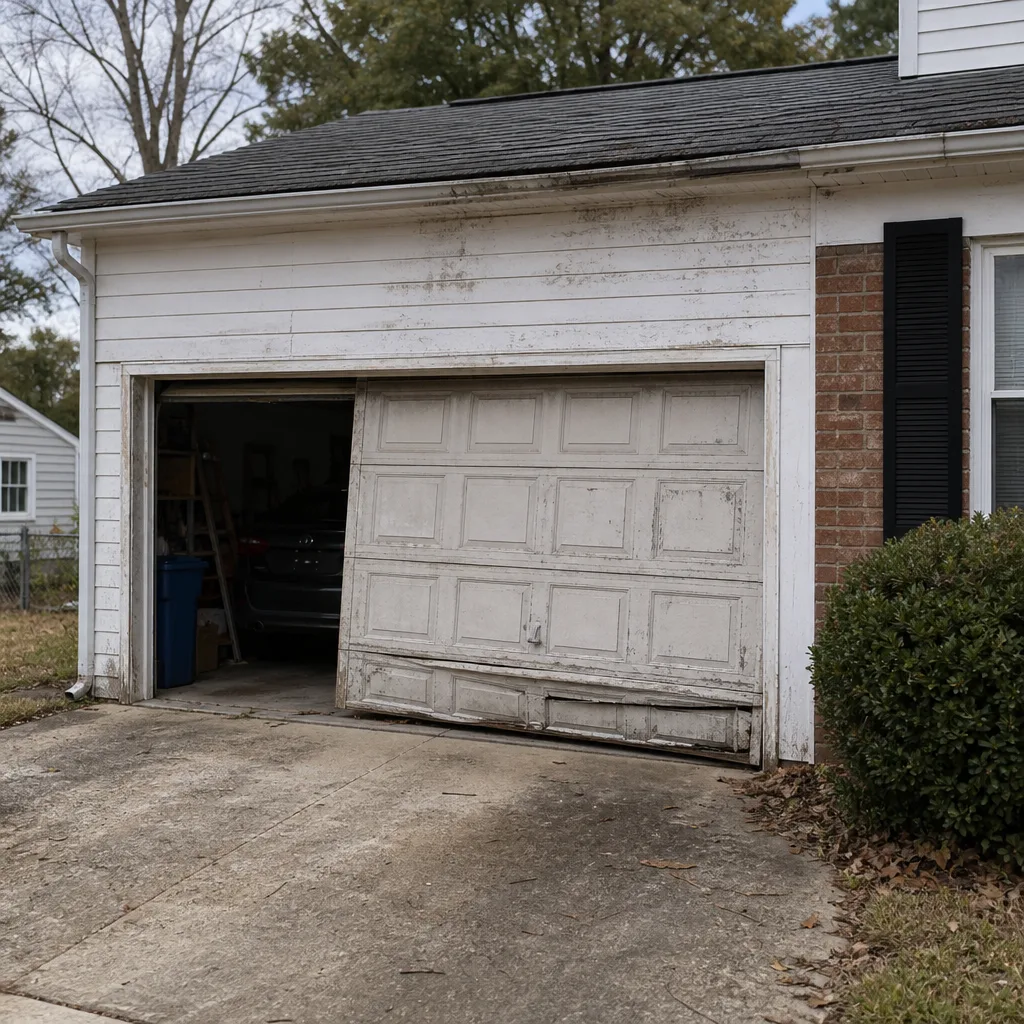 Before
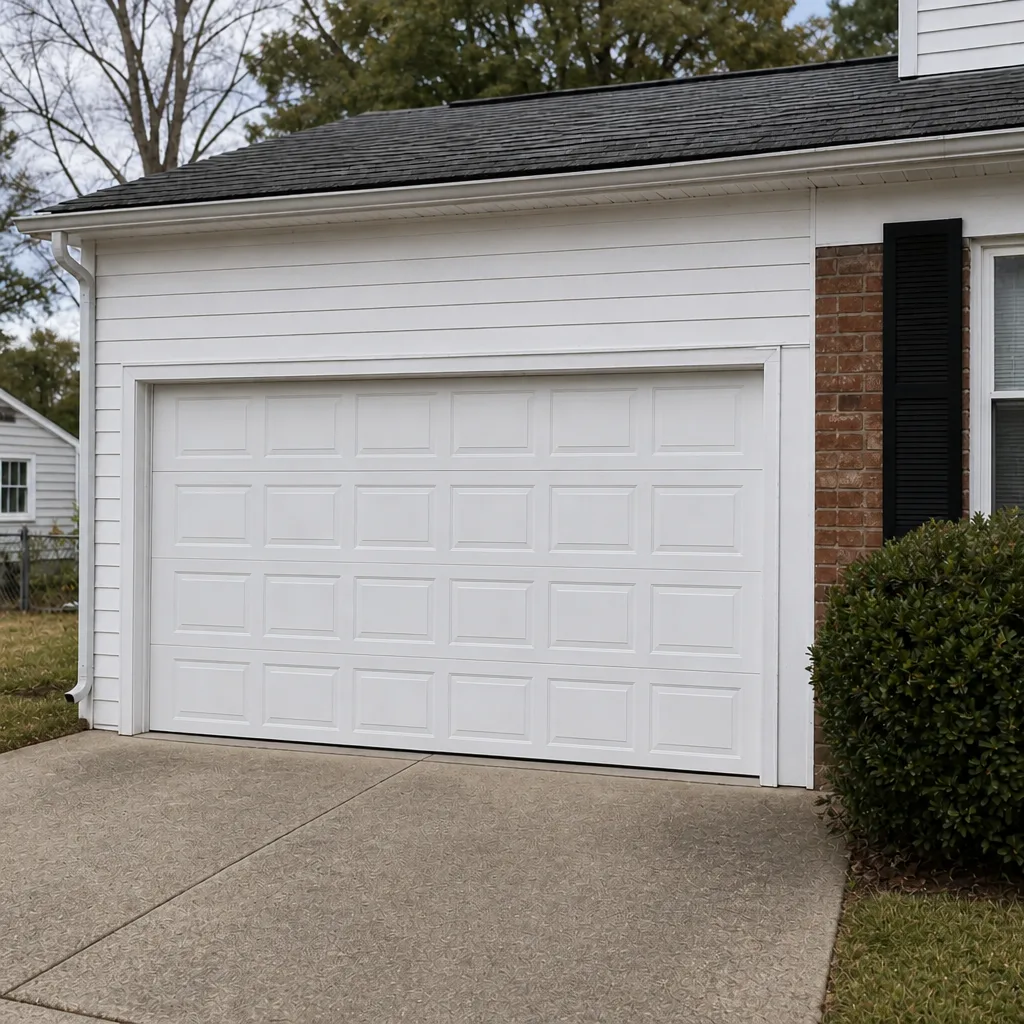 After
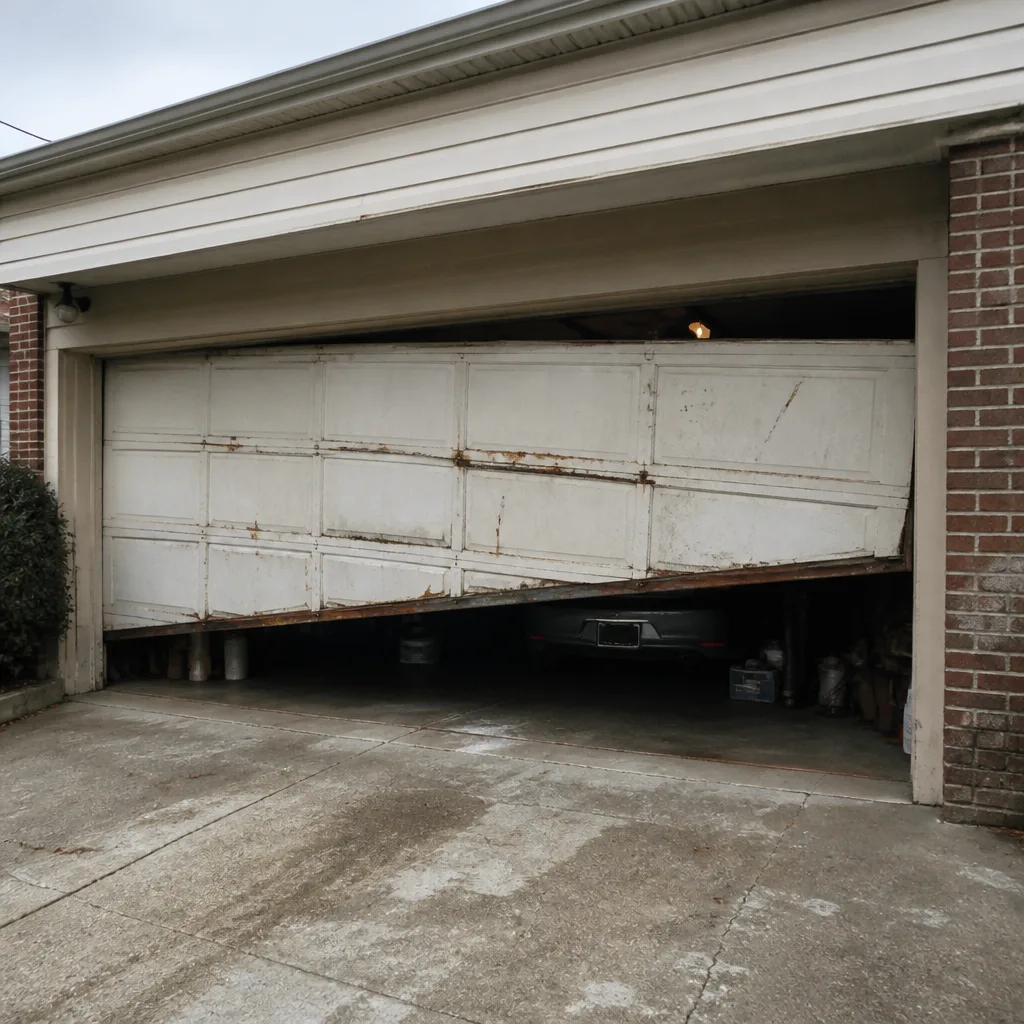 Before
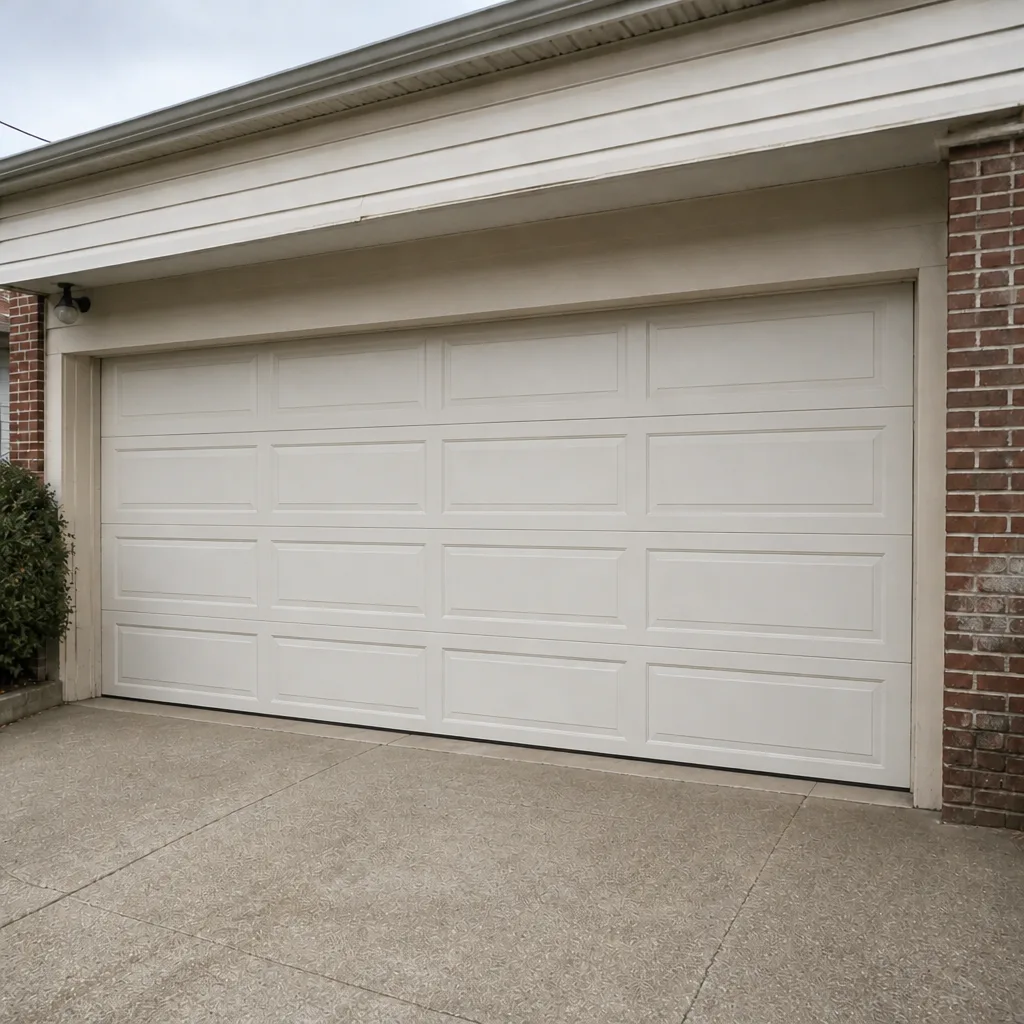 After
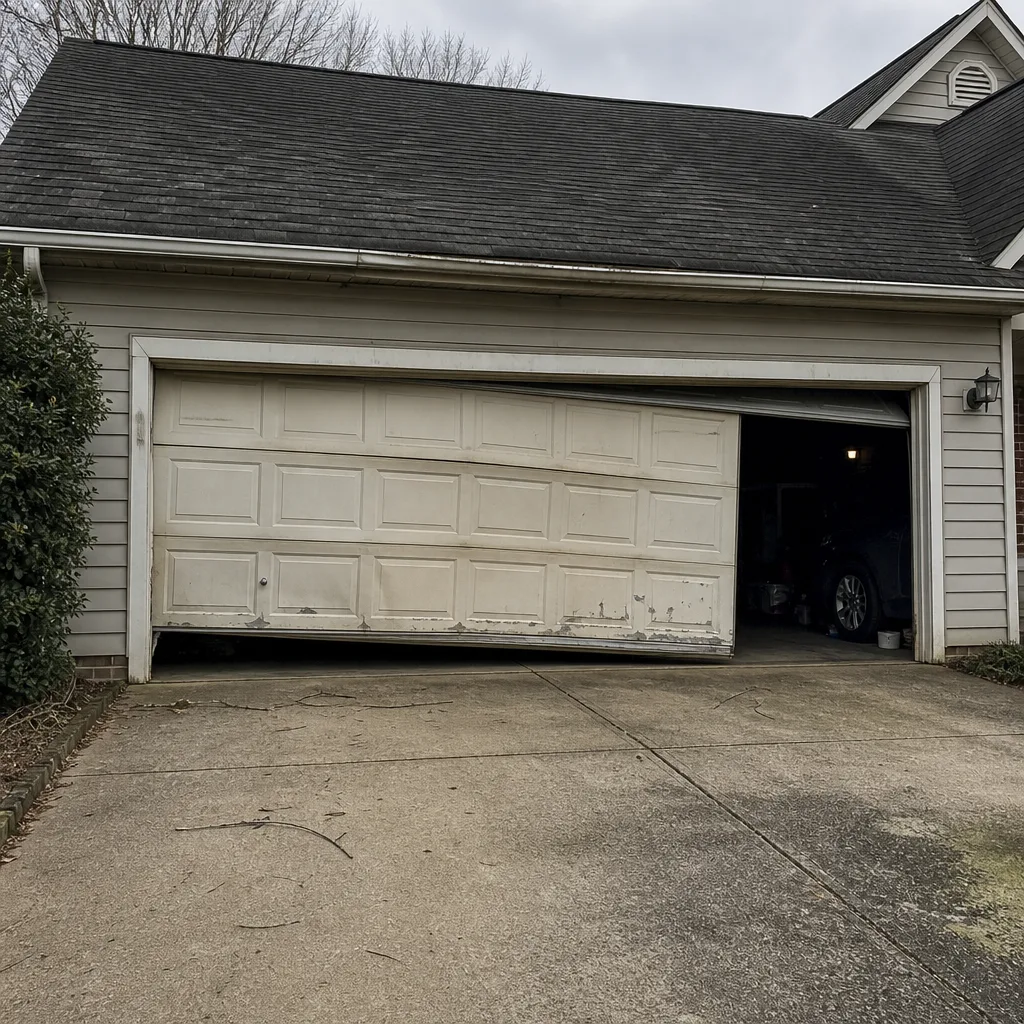 Before
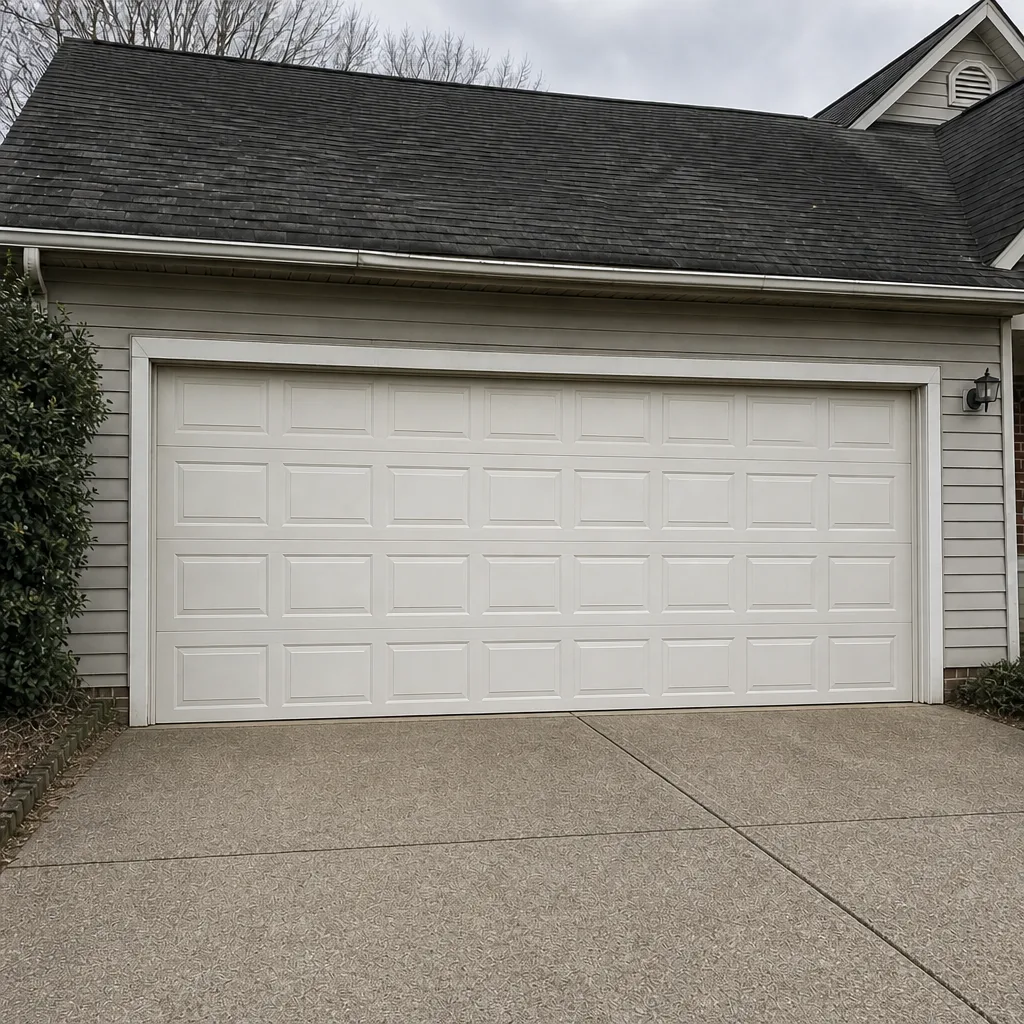 After
When to Call a Professional
A torsion spring that snaps, a cable that frays off the drum, a door that hangs crooked and won’t close, an opener that runs but doesn’t lift the door, or a section that’s been backed into and no longer seals against the frame – these are all jobs for a technician, not a weekend project. High-tension springs and cables store enough energy to cause serious injury if they’re handled without the right winding bars and knowledge of the door’s cycle count. A trained technician is the difference between a job that’s finished safely and an emergency room visit.
Richmond Garage Door Repair Experts offers free estimates in Richmond – call (866) 490-7906. We answer 24/7, with fast dispatch from 7am to 7pm, Sunday through Friday. Our technicians have up to 11 years of experience across LiftMaster, Chamberlain, Genie, Craftsman, Clopay, Amarr, Wayne Dalton and Raynor equipment.
Frequently Asked Questions
Usually no for a like-for-like replacement of the same size and rating, and yes when the replacement is part of a permitted project, a structural change to the opening, or a replacement that must document its energy performance under Virginia’s adopted code. Call the building department for your jurisdiction – Richmond City, Henrico County or Chesterfield County – and give them the specific scope. Call (866) 490-7906 for a free estimate on the door work itself.
No. Spring, cable, roller, hinge and track repairs are maintenance on an existing assembly and don’t require a permit in Richmond City, Henrico or Chesterfield. Spring work is also the most dangerous job on a garage door, which is why it’s the service we handle with the most care. Call (866) 490-7906 for a free estimate.
The final inspection itself typically runs 15 to 30 minutes on site. Scheduling timelines vary by jurisdiction: Richmond City usually lands within a few business days, Henrico County often has the shortest window for a residential final, and Chesterfield County runs a similar pace. Your jurisdiction sets the actual date. Call (866) 490-7906 to coordinate the installation around the inspection window.
Yes, usually. Title companies pull the property’s permit history, and a replacement with no record on file can become a condition of closing – often requiring a retroactive permit and inspection. The buyer’s inspector may also flag a door that doesn’t match the energy compliance record on file. Permitting it correctly the first time is cheaper than remediating it later. Call (866) 490-7906 for a free estimate on the door work.
The exact U-factor requirement comes from the edition of the International Energy Conservation Code currently adopted in Virginia and enforced by your jurisdiction, and it depends on whether the door sits on the conditioned envelope. Your building department will tell you the number. What matters for the inspection is that the door you order has the label and documentation matching that number. Call (866) 490-7906 and we’ll walk through door models that carry the right documentation.
The permit is filed by the property owner or the contractor of record, and it’s submitted to your jurisdiction’s online portal. We prepare the door spec and the documentation the inspector will want, and we schedule the installation around the inspection window so the door is up and documented when the inspector arrives. The permit fee is paid to the jurisdiction, not to us. Call (866) 490-7906 for a free estimate.
The Bottom Line
In Richmond, the permit question comes down to one word: repair or replacement. Repair a spring, cable, roller or opener and you almost never need a permit. Replace a door as part of a larger project, a structural change, or a job that has to document its energy performance, and the permit process kicks in. Richmond City, Henrico and Chesterfield each handle the process their own way, but the sequence is the same – confirm the energy requirement, order the door with the right documentation, submit the permit, install after the permit issues, schedule the final, and keep the closed permit in your home file. Skip it and it surfaces at inspection or at closing. Do it correctly and it takes a couple of phone calls and one visit.
If you’re ready to move on a door – repair or replacement – call (866) 490-7906 for a free estimate with Richmond Garage Door Repair Experts.
Written by the team at Richmond Garage Door Repair Experts.