
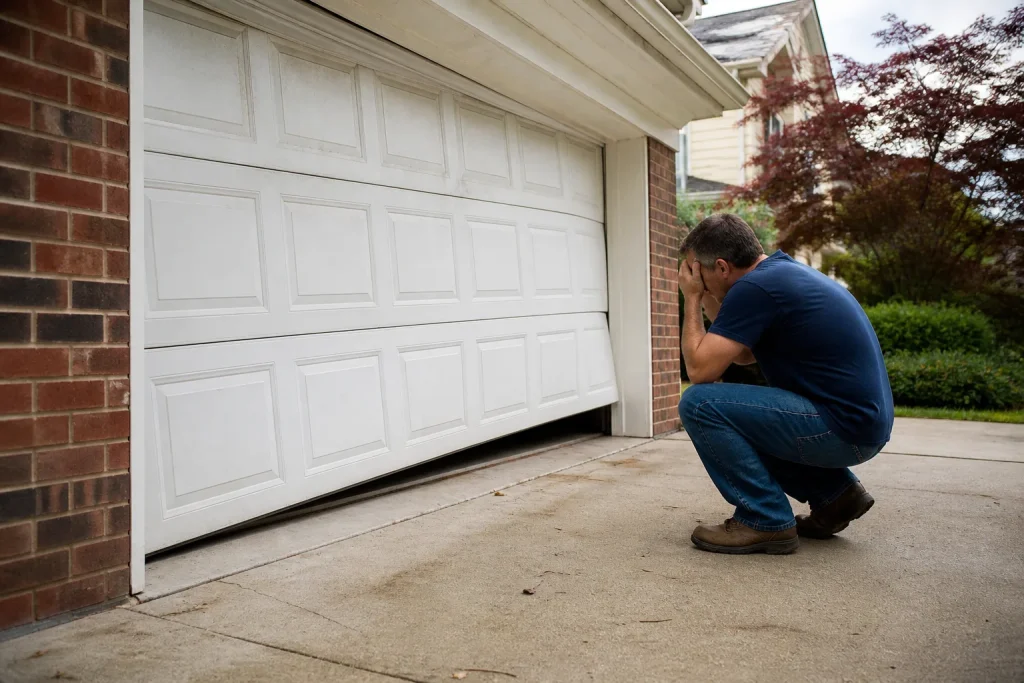
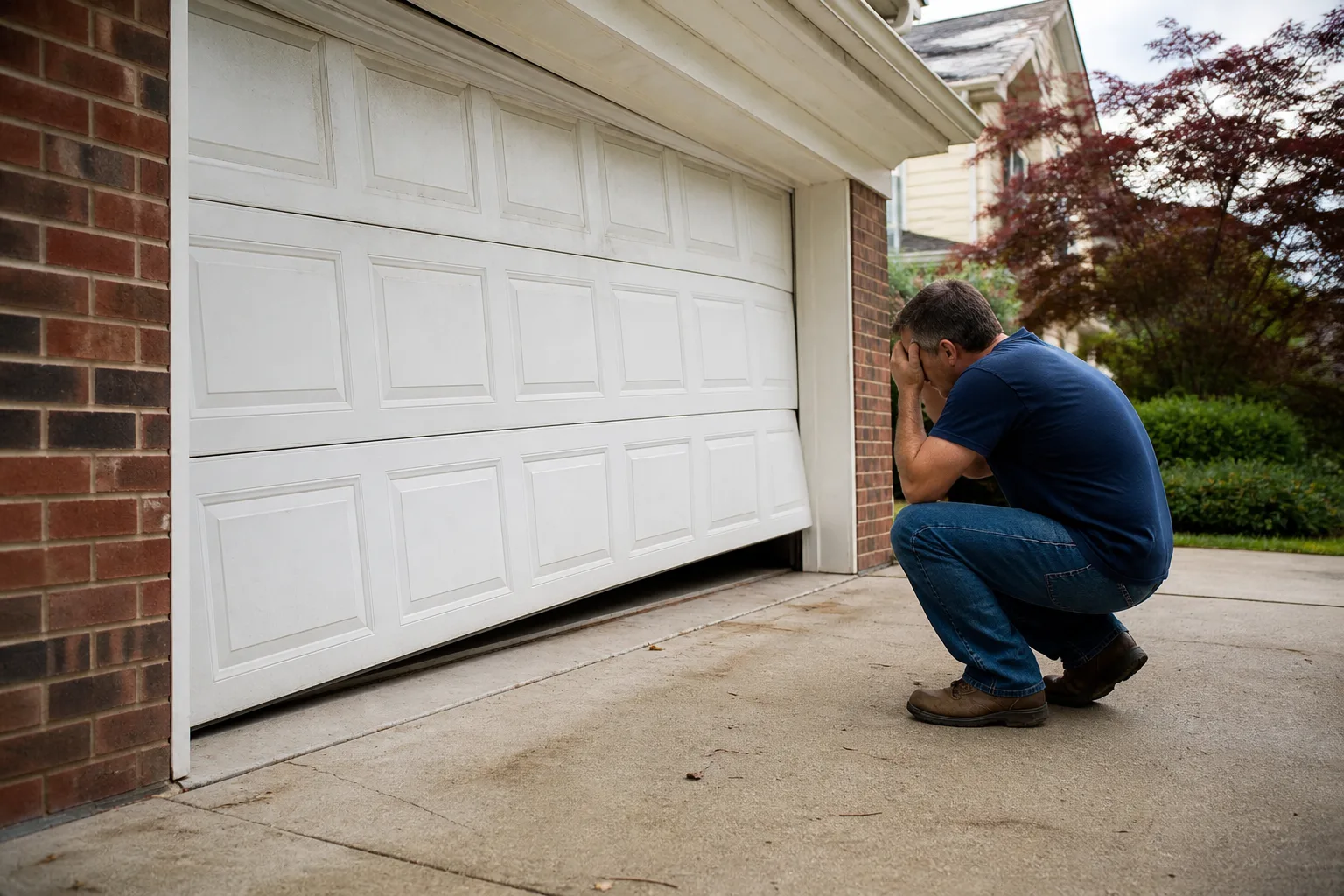
Top Signs You Need Garage Door Service – Don’t Ignore These
By the time your garage door is visibly off-track or refuses to close, you’ve likely passed three earlier warning signs that each cost a fraction of the eventual repair. The expensive failures – snapped springs, frayed cables, a burned-out opener motor – almost always announce themselves first in ways most homeowners never think to check. Here are the quiet symptoms to watch for in Richmond, and how to tell a “watch and wait” from a “call today.”
Why the Obvious Signs Are Already Too Late
A garage door is a system of balanced forces: springs carry the weight, cables guide it, rollers track it, and the opener just nudges it along. When one part starts to fail, the others quietly compensate – which is exactly why the door can look and sound fine right up until it isn’t. The classic warning-sign lists (loud noise, slow movement, crooked door) all describe failures that have already progressed. Catching a problem earlier means learning to read the subtler cues that show up weeks or months before a breakdown.
In our experience, the homeowners who avoid the big repair bills are the ones who look at their door the way they look at their car’s dashboard – scanning for the small inconsistencies before they become urgent. Garage doors are all we do, so we’re partial, but it’s genuinely one of the few home systems where a two-minute visual check can save real money.
Key Takeaways
- Uneven wear on weatherstripping, a strained opener hum, and an uneven floor gap are often the first clues.
- Torsion spring condition can be read from coil gaps and rust patterns before a snap.
- Intermittent reversing with no obstruction is almost always a door problem, not an opener problem.
- Temperature swings make spring and cable failures more likely in Richmond’s spring and fall.
- Some symptoms mean “watch and wait”; others mean “call today.”
Pre-Failure Signs Most Check-the-Door Lists Skip
These are the second-order symptoms – the ones that show up before the door itself starts misbehaving. Each is easy to check and tells you something specific about what’s going on inside the system.
1. Uneven wear marks on the weatherstripping
Run your eyes along the rubber seal at the bottom of the door where it meets the concrete. If one section is worn, flattened, or torn more than the rest, the door isn’t descending evenly. That usually points to a track out of alignment, a bent roller, or a cable that’s beginning to slack on one side. It’s a cheap fix at this stage – a roller or a track adjustment – and a much bigger one if the door keeps dragging on one edge.
2. An opener motor that sounds strained
Listen to the opener as it lifts the door. A healthy opener hums evenly and briefly. A strained one labors – the motor pitch rises, the run takes longer, and it sounds like it’s working to drag the door up rather than guide it. That strained hum often means the door has become heavier to lift, usually from spring tension fading or rollers seizing. The opener is pulling more current because it’s doing more work than it was designed to do. Left alone, the motor eventually gives out.
3. An uneven gap at the floor seal
Shut the door and look at the gap between the bottom seal and the floor. A consistent thin shadow is normal. A gap that’s wider on one side than the other means the door is slightly tilted – a sign of uneven cable tension or a balance problem. It’s also your first security clue: an uneven seal lets in weather, pests, and, frankly, a clear line of sight. This one’s worth checking in Richmond after the freeze-thaw swings of late winter.
How to Read Your Torsion Spring Before It Snaps
Torsion springs are the high-tension heart of the door, and they’re the component most worth understanding before they fail. A trained eye can often gauge a spring’s remaining life from two simple visual cues – without touching it.
The coil gap test. Look at the coil of the spring above the door (never reach up and handle it). A healthy torsion spring has tightly packed, evenly spaced coils. If you see a visible gap opening between coils – the spring starting to stretch and separate – it’s losing tension and is closer to the end of its life than you’d want.
Surface rust patterns. Light, even surface rust is normal over time. What’s more telling is concentrated rust or pitting on one section of the coil, which suggests uneven stress and a shorter remaining cycle life. A spring that’s rusty, gapped, and paired with a door that feels heavier than usual is a spring running out of road.
Safety warning: torsion springs and their cables store enormous energy. Never attempt to adjust, loosen, or replace one yourself – a released spring can cause severe injury. Reading the spring’s condition is a visual check only. Any repair needs a trained technician who knows how to de-tension the system safely. Springs are dangerous, and that’s precisely why garage door repair on tension components is not a DIY job.
The Symptom Homeowners Blame on the Opener (It’s Usually the Door)
Intermittent reversing with no obstruction in the way is the symptom homeowners most often misdiagnose. The door starts down, reverses partway, tries again, reverses again – and the natural conclusion is “the opener’s gone bad.” Nine times out of ten, it’s a mechanical door issue, not an opener issue.
Here’s why. Modern openers – we work with garage door opener repair across LiftMaster, Chamberlain, Genie, and Craftsman systems – rely on the door moving freely to complete their travel. When something in the door mechanism binds, the opener senses resistance and, as a safety feature, reverses. Common culprits behind this “phantom reversing” include:
- A roller that’s seized or jumped its track
- A track that’s slightly out of alignment, catching the door mid-travel
- A door that’s out of balance and binding on one side
- Debris or a bent hinge catching the door panel
Replacing the opener in this situation fixes nothing and wastes money, because the opener was never the problem. This is where brand familiarity earns its keep: a technician who knows Clopay and Amarr door hardware as well as the opener systems can trace the binding to its actual source instead of guessing. The fix is usually a roller, a track adjustment, or a balance correction – quick, and far cheaper than a new motor.
Why Richmond Spring and Fall Spike Cable and Spring Failures
Garage door failures aren’t evenly spread across the year in Richmond. They cluster in spring and fall, and the reason is temperature differential – the swing between warm days and cool nights. Metal expands and contracts with those swings, and the constant cycling puts extra stress on the two components that carry the most load: springs and cables.
As temperatures drop and rise repeatedly, spring steel fatigues faster, and cables that are already slightly worn are more likely to fray under the added tension. A door that felt fine in a stable stretch of weather can start misbehaving the first week the mercury bounces. That’s why an inspection in March and again in October catches weaknesses before the season’s temperature swings expose them.
In Richmond, this matters because of our particular pattern: mild, humid stretches punctuated by sharp cold snaps. The door sits through humidity that quietly corrodes cables, then gets hit with a sudden cold that makes everything brittle. A cable that’s been slowly rusting all summer is exactly the one that fails the first cold morning of fall. If you want a seasonal check on these parts, garage door repair carried out before the swing is far cheaper than an emergency call after it.
Watch and Wait vs. Call Today: A Quick Decision Framework
Not every symptom is urgent, and knowing which is which saves both money and stress. Here’s a simple framework based on which component is showing the sign.
Watch and wait (monitor, plan a service call soon)
- Weatherstripping: uneven wear – schedule a roller or track check within a few weeks.
- Slight uneven floor gap: minor tilt – get it checked before it worsens.
- Early surface rust on the spring: have it inspected, but a small amount isn’t an emergency.
- Occasional strained opener hum: worth a look, especially if it’s new.
Call today (don’t wait)
- Visible coil gap on the torsion spring: a snap is likely near – get a technician out.
- Frayed or visibly damaged cable: cables store lethal tension; this is not a wait.
- Door stuck open or won’t close at all: security and access problem – same-day.
- Intermittent reversing with no obstruction: the door’s binding; fix the cause before it worsens.
- Any door that has come off its track: stop operating it immediately.
The rule of thumb: anything involving cables, springs, or the door being off its track is a “call today.” Anything involving seals, rollers, or a mild balance issue is a “watch and wait, then service.” When in doubt, err on the side of the call – a free estimate costs nothing and tells you exactly where you stand.
When to Call a Pro
Most of the checks above are things any homeowner can do safely with their eyes and ears – a visual scan and a listen. What you should never do yourself is anything that involves touching a spring or a cable under tension, or forcing a door back onto its track. Those are the repairs that turn a frustrated afternoon into a hospital visit. A trained technician can read a door’s whole system – opener, panel, spring, and track – in one visit, which is exactly why we cover the full door lifecycle, from the opener to the panel to the spring, so you’re not juggling separate callouts.
If you’d rather not climb the ladder and poke at it yourself, call (866) 490-7906. We answer 24/7, with fast dispatch from 7am to 7pm, Sunday through Friday.
Related services in Richmond
Depending on what the signs point to, you may be looking at garage door repair for hardware and balance issues, garage door opener repair for motor or reversing faults, or garage door installation if the panels themselves are past saving. Our technicians have up to 11 years of experience across the major brands – Clopay, Amarr, Wayne Dalton, and Raynor doors, plus LiftMaster, Chamberlain, Genie, and Craftsman openers – so you’re not getting a “we’ll figure it out” visit.
The Bottom Line
The signs that matter most aren’t the ones everyone talks about – they’re the quiet ones that show up first: uneven weatherstripping, a strained opener hum, an uneven floor gap, and a spring that’s starting to show coil gaps or concentrated rust. Read those early, and you catch most problems at their cheapest. In Richmond, make a habit of checking your door in March and October, when temperature swings make spring and cable failures more likely. If something on the “call today” list shows up, don’t operate the door – get a pro out.
If you’re in Richmond and need help, Richmond Garage Door Repair Experts offers free estimates – call (866) 490-7906. We answer 24/7. Fast dispatch from 7am to 7pm, Sunday through Friday.
Frequently Asked Questions
The clearest early signs are uneven wear on the weatherstripping, an opener motor that hums with a strained pitch, an uneven gap at the floor seal, and any visible gap or concentrated rust on the torsion spring. If you see a frayed cable, a spring with an opening coil gap, or a door that’s off its track, stop operating it and call a technician. Call (866) 490-7906 for a free estimate – estimates are free.
Sometimes, but noise and slowness are symptoms, not diagnoses. A slow, laboring door usually points to a balance issue or weakening springs, while grinding or rattling often means worn rollers or a track that needs adjustment. The symptom matters less than which component is showing the sign – our team will trace it to the source rather than guess. Call (866) 490-7906 to book a look.
You can read the spring’s condition visually, but you should never operate a door with a visible coil gap or a badly rusted, pitted spring – it’s near the end of its life and could fail. Don’t try to loosen or adjust it yourself; the tension can cause serious injury. Get a trained technician out. Call (866) 490-7906 for an exact quote – estimates are free.
Call today if the door won’t close or is stuck open, if any cable is frayed or damaged, if the door has come off its track, or if the torsion spring shows a visible gap. These are access, security, or safety issues that shouldn’t wait. We answer 24/7. Fast dispatch from 7am to 7pm, Sunday through Friday – call (866) 490-7906.
Written by the team at Richmond Garage Door Repair Experts.
Need Garage Door Help?
Call Richmond Garage Door Repair Experts - the local pro we connect you with is licensed and insured, here with fast help in Richmond.
(866) 490-7906